


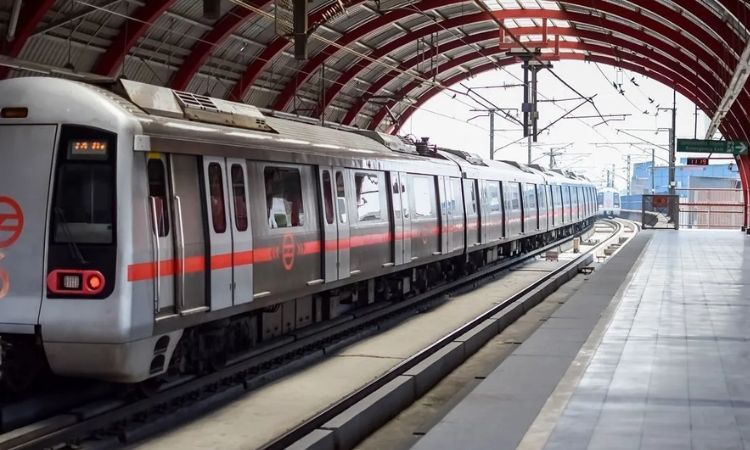
If you live in Najafgarh, Narela, Rohini Sector 34, or the crowded lanes of Mayur Vihar Phase III, there is genuinely good news for you. Delhi Chief Minister Rekha Gupta has announced a massive expansion of the Delhi Metro network.
It will include 97 kilometres of brand-new metro lines, 65 new stations, and 7 entirely new corridors, all under Metro Phase V(B).
The announcement was made on May 4, 2026, at the Delhi Metro Rail Corporation’s (DMRC) 32nd Foundation Day celebrations. The total estimated cost is Rs 48,204.56 crore, making it one of the most ambitious metro expansions India has seen in a single phase.
Why Does This Matter?
This expansion was much needed and will provide better connectivity. Delhi’s metro has always been a lifeline, but for millions living on the city’s edges, it has also been a distant promise.
In Outer Delhi, there are dense residential colonies, growing markets, and overloaded buses, but now this expansion will fix this issue. Phase V(B) is clearly aimed at fixing that gap.
The Detailed Project Report (DPR) for all 7 corridors has been prepared by DMRC and submitted to the central government for approval. Four corridors have been marked as priority projects, with a target to complete them by 2029. The remaining three are non-priority corridors expected to follow later.
Also Read – TOP 10 Posh Areas in Delhi
All 7 Corridors – Full Details
Corridor 1: Dhansa Bus Stand (Najafgarh) to Nangloi
11.859 km | 9 stations | Fully elevated | Interchange: Green Line at Nangloi, Grey Line at Dhansa
Corridor 2: Central Secretariat to Kishangarh
15.969 km | 10 stations | Mostly underground (13.7 km) | 9 underground + 1 elevated station
Corridor 3: Samaypur Badli to Narela DDA Sports Complex (Line-2 Extension)
12.89 km | 8 stations | Fully elevated
Corridor 4: Kirti Nagar to Palam (Line-5 Extension)
9.967 km | Connects south-west Delhi
Corridor 5: Jor Bagh to Mithapur
16.991 km | Covers Lodhi Colony, Lajpat Nagar, Jasola, Jaitpur, Mithapur | Interchange: Yellow, Violet, Pink, Magenta, Golden lines
Corridor 6: Shastri Park to Mayur Vihar Phase III
13.197 km | 8.99 km underground | Covers Geeta Colony, Gandhi Nagar, Patparganj, Kondli | Interchange: Red, Blue, Pink lines
Corridor 7: Keshavpuram to Rohini Sector 34
16.285 km | 12 stations | Fully elevated | Covers DTU, West Shalimar Bagh, Pitampura, Rohini | Interchange: Red, Pink lines
What Changes for Commuters?
Each corridor targets a specific pain point. Corridor 1 finally gives Najafgarh its first metro connection. Corridor 3 pushes the network all the way to Narela, one of Delhi’s most underserved northern zones. Corridor 7 will provide connectivity to lakhs of residents in the Rohini-Pitampura belt, who currently face long, congested road journeys.
The Jor Bagh to Mithapur stretch of Corridor 5 is arguably the most interconnected, stitching together five metro lines along the way.
Corridor 6 will transform daily life for East Delhi residents in Geeta Colony, Gandhi Nagar Market, and Mayur Vihar Phase III, giving them direct underground access to the Red and Blue lines.
What Happens Next?
CM Rekha Gupta has directed DMRC to prepare separate revised DPRs for priority and non-priority corridors. Once the central government gives its approval, construction on the priority corridors is expected to begin. If the 2029 target is met, Delhi commuters could be riding on at least part of this new network within three years.
It is also worth noting that Phase V(A), covering three smaller extensions including the Central Vista corridor and Aerocity to IGI Terminal 1, was already approved by the Union Cabinet in December 2025. Phase V(B) builds on that momentum and lays out a much larger vision for Delhi’s transport future.
Delhi is one of the largest metro networks in the world, with an annual ridership of 235.8 crore, and this expansion signals that Delhi’s growth story is far from over. The metro is simply catching up with the city.
Also Read – Sector 24 Rohini