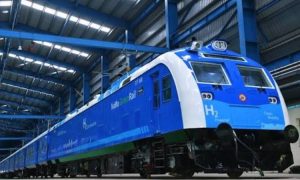
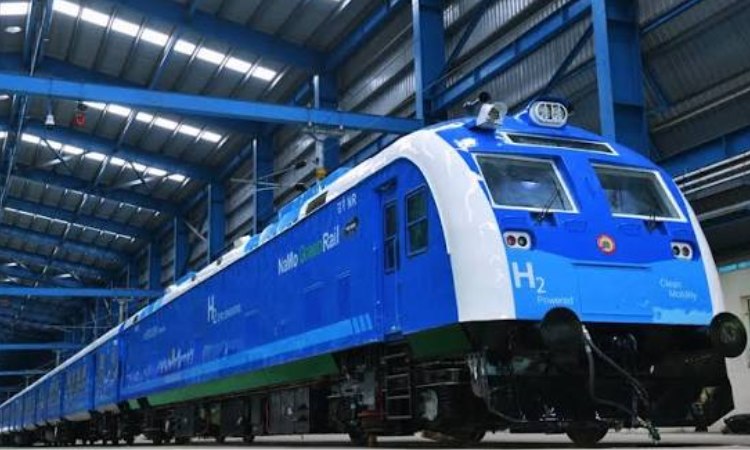



India started its first hydrogen-powered passenger train on 17 July 2026. Prime Minister Narendra Modi flagged off the train at Jind railway station in Haryana. The train runs on the Jind-Sonipat section of Northern Railway.
This is the first indigenous hydrogen train in India. It is also called a green rail project because it does not burn diesel. In this detailed article we will explain what the train is, how it works, what safety systems it has, and why it matters for India’s railway system.
What Is India’s First Hydrogen Train?
India’s first hydrogen train is a passenger train that makes its own electricity on board using hydrogen. It does not use diesel or grid electricity from overhead wires. The train uses a hydrogen fuel cell system to produce power. This power runs electric motors that move the train.
The train was designed and built in India. The Research, Design & Standards Organisation (RDSO) prepared the technical specifications. This hydrogen train is manufactured in Integral Coach Factory (ICF) in Chennai.
It is part of the Atmanirbhar Bharat (self-reliant India) plan, since the train was designed, engineered, and built in India
The train is a pilot project. This means Indian Railways is testing the technology first on one route before using it on other routes. The test route is the Jind-Sonipat section in Haryana.
Key Features and Specifications
Below is a simple table with the main facts about India First Hydrogen Train.
| Feature | Detail |
| Train type | 10-car hydrogen fuel cell trainset |
| Power system | 1,200 kW hydrogen fuel cell propulsion system |
| Maximum speed approved | 75 km/h |
| Design speed | 110 km/h |
| Passenger capacity | About 2,600 passengers |
| Route | Jind Junction – Gohana Junction – Sonipat |
| Coach make-up | 2 Hydrogen Driving Power Cars (DPCs) + 8 Trailer Coaches (TCs) |
| Hydrogen storage at Jind | About 3,000 kg at a time |
| Built by | Integral Coach Factory (ICF), Chennai |
| Design authority | Research, Design & Standards Organisation (RDSO) |
| Inaugurated on | 17 July 2026 |
India’s First Hydrogen Train Route and Stations
The train connects Jind Junction, Gohana Junction, and Sonipat. It also stops at smaller stations on the way. The proposed halts include Jind City, Pandu Pindara Junction, Lalit Khera Halt, Bhambhewa, Isapur Kheri Halt, Butane Halt, Khandrai Halt, Rabrah Halt, Lath Halt, Mohana, Barwasni Halt, and Sonipat New.
The maintenance base for the train is at Shakurbasti in Delhi. Indian Railways has prepared this base to service the hydrogen train.
How Hydrogen Fuel Cell Technology Works?
The train uses a Proton Exchange Membrane Fuel Cell (PEMFC). This fuel cell makes electricity through a chemical reaction between hydrogen and oxygen. The reaction happens across a special membrane called Perfluorosulfonic Acid (PFSA). The only outputs of this reaction are water vapour and heat. The train does not release smoke, soot, or carbon dioxide from its engine.
Hydrogen holds more energy per kilogram than diesel. Hydrogen has about 120 megajoules per kilogram (MJ/kg) of energy. Diesel has about 43 MJ/kg. This means hydrogen can be a strong fuel source while producing far less pollution.
Each Hydrogen Driving Power Car (DPC) on the train carries three main parts: fuel cells, lithium iron phosphate (LFP) batteries, and hydrogen storage cylinders. The fuel cells make electricity. The batteries store extra electricity. The cylinders hold the hydrogen gas safely until it is used.
Also Read – Lucknow Kanpur Expressway Opens
Hydrogen Storage and Refuelling Infrastructure at Jind
Indian Railways built its largest railway hydrogen storage and refuelling facility at Jind, Haryana. This facility can store close to 3,000 kg of hydrogen at one time. The Petroleum and Explosives Safety Organisation (PESO) gave the licence needed to store and dispense compressed hydrogen gas at this site.
The facility follows international safety standards. These include NFPA-2 rules from the National Fire Protection Association in the United States, and the ISO 19880 series from the International Organisation for Standardisation. TÜV SÜD, a technical inspection company from Germany, carried out an independent safety check of the full system.
The Jind facility has a hydrogen compression system for refuelling, technical staff and spare parts for repairs, and a standby compressor. The standby compressor makes sure refuelling does not stop even if the main compressor needs a repair.
Safety Measures on the Hydrogen Train
Indian Railways has added many safety systems to the train and the refuelling site. These systems check for problems at every step, from storing hydrogen to using it on the train.
- Hydrogen leak detectors are installed at the production, storage, and dispensing points.
- Flame detectors watch for fire risk at all times.
- Safety sensors get regular inspection and cleaning.
- The train has non-stop ventilation, so air keeps moving through it at all times.
- If the system finds heat, flame, or smoke, it can cut off the hydrogen supply on its own, without a person doing it.
- The Loco Pilot’s cabin has a special emergency mode to move the train to a safe spot if needed.
- A screen in the cabin shows the Loco Pilot the real-time health of the whole hydrogen system.
- The hydrogen refuelling system is under 24×7 monitoring.
- Trained and certified staff handle all critical operations, and technical staff will travel with the train during its first phase of service.
Indian Railways has also set standard operating procedures and regular safety audits for the project.
How India Compares with Other Countries?
With this launch, India joins a small group of countries working on hydrogen-powered trains. This group includes Germany, Japan, China, and the United States. Hydrogen train technology is still new around the world, so most countries, including India, are still testing and learning from early projects.
According to officials, India’s train can carry about 2,600 passengers, which reports describe as the highest capacity among hydrogen trains running anywhere in the world today.
Why This Rail Project Matters?
This train is more than one new trainset. It builds the systems, staff skills, and infrastructure needed for hydrogen trains in the future. The project helps Indian Railways test the technology, the operating steps, and the maintenance work needed for hydrogen trains.
The project also supports India’s National Green Hydrogen Mission and the country’s net-zero carbon goals. If the pilot succeeds, Indian Railways may use hydrogen trains on more routes in the future. This would help cut diesel use and lower pollution from trains, especially on routes that do not have overhead electric wires.
Conclusion
Overall, India’s First Hydrogen Train is a game changing project and it will make train traveling cleaner and more sustainable. It run on the Jind-Sonipat route in Haryana after the inauguration on 17th July 2026 by PM Narendra Modi.
It uses hydrogen fuel cell technology to make its own electricity and produces only water vapour as waste. The project includes a large hydrogen storage and refuelling facility at Jind, along with strong safety systems on board and at the plant.
The train supports India’s National Green Hydrogen Mission and its net-zero carbon goals. The results from this pilot project will help Indian Railways decide on using hydrogen trains on more routes in the future.
Also Read – Delhi Dehradun Expressway
Frequently Asked Questions
Q1. What is India’s first hydrogen train?
Ans. It is a passenger train that makes its own electricity using hydrogen fuel cells, instead of using diesel or overhead electric wires. It runs on the Jind-Sonipat section of Northern Railway in Haryana.
Q2. When did the hydrogen train start running?
Ans. The train was inaugurated on 17 July 2026 by Prime Minister Narendra Modi at Jind railway station.
Q3. What is the speed of the hydrogen train?
Ans. It is approved to run at a maximum speed of 75 km/h. Its design speed is 110 km/h.
Q4. How many passengers can the hydrogen train carry?
Ans. The train can carry about 2,600 passengers.
Q5. Where is the hydrogen for the train stored?
Ans. Hydrogen is stored at a dedicated facility in Jind, Haryana. This facility can hold close to 3,000 kg of hydrogen at a time.
Q6. Who built India’s hydrogen train?
Ans. The Integral Coach Factory (ICF) in Chennai built the train. The Research, Design & Standards Organisation (RDSO) prepared its technical design and specifications.
Q7. Is the hydrogen train safe?
Ans. Yes. The train has hydrogen leak detectors, flame detectors, automatic hydrogen supply cut-off, non-stop ventilation, and 24×7 monitoring of the refuelling system. TÜV SÜD, an independent German safety agency, checked the full system before launch.
Q8. How is hydrogen train technology different from diesel trains?
Ans. A hydrogen train makes electricity on board using a chemical reaction between hydrogen and oxygen. The only outputs are water vapour and heat. A diesel train burns fuel and releases smoke and carbon dioxide.
Q9. Which countries other than India use hydrogen trains?
Ans. Germany, Japan, China, and the United States are also working on hydrogen-powered trains.