



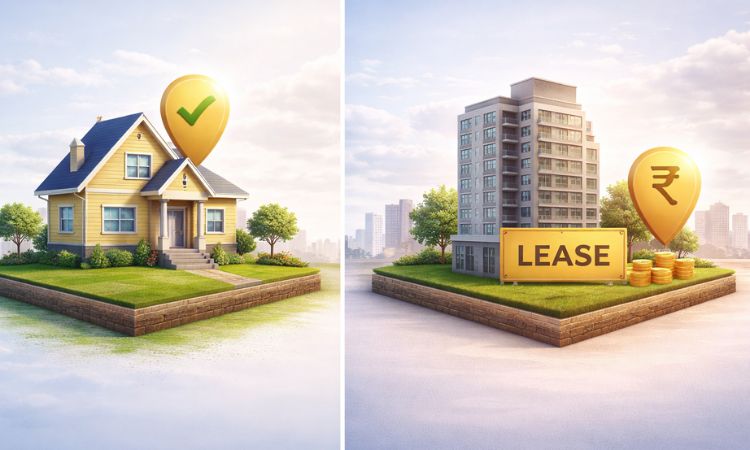
In India, real estate may be either freehold or leasehold. Many of you who have attended hearings about government proposals to convert certain parcels of property from leasehold to freehold may already have heard of this topic.
You wonder what you should know about freehold property, how it is different from leasehold property, what benefits you would get by owning freehold property, your rights as an owner of freehold property, the documents needed to buy freehold property and a lot more.
An understanding of freehold Vs leasehold property should assist you in making wise decisions about your real estate purchase/sale/investment, and is therefore helpful for both first time home buyers and experienced real estate investors.
What is Freehold Property?
A freehold property means the buyer has complete ownership of both the property and the land it stands on. Once purchased, there is no limit to how long the buyer will own the land/property or for how long the property will exist (The only limitations on what the buyer can do with the property are the laws of the jurisdiction). In addition, the owner has the right to sell the property at any time or lease it to anyone.
Freehold properties have clear ownership rights, making them worth more. These properties are also easier to sell and banks prefer freehold properties when giving out home loans.
The homeowner (freeholder) is required to maintain the property without the involvement of anyone else. The freeholder has the right to stay in the property for as long as they own it.
What is Leasehold Property?
Leases indicate that you own the property for a specified period of years; however, the land itself continues to be owned by the landlord. Lease periods can last anywhere from one to ninety-nine years and then become the property of the landlord again.
Generally, all sale or transfer transactions require the consent of the landlord. Leasehold properties tend to cost less than freehold properties and banks will tend to impose stricter loan terms due to a less than indefinite ownership period.
If you wish to extend your lease on a leasehold property, then there may be an extra cost associated with this. Leasehold properties are usually found in areas owned by government or authority.
Also Read – What is BBA in Real Estate
Difference Between Freehold and Leasehold Property
If you want to see the difference between freehold and leasehold properties, then you may want to check this extensive list below:
| Name | Leasehold | Freehold |
| Time period | Lease duration can be of 1, 30, 60, 99 years | No tenure restrictions |
| Ownership rights | Leaseholder has the right to occupy the property for a fixed term, post which the land ownership is retained by the original owner | Owner has complete ownership of the land and property indefinitely |
| Transfer of Ownership | Requires the original owner’s consent and a transfer fee may be applicable | Easy to sell, transfer, or gift without restrictions |
| Maintenance responsibility | Landlord is typically responsible for the building structure, while the leaseholder may handle interiors | Owner is fully responsible for maintenance and repairs |
| Property price and value | Generally lower value due to limited ownership rights and lease renewal considerations; value can depend on the remaining lease period | Usually higher due to complete ownership rights |
Pros and Cons of Freehold Property
Pros of Freehold Property
- When you own the property in a freehold basis, there’s no time limit on your ownership of the land or the structure upon the land.
- Because you own both the land and the structure, you do not pay rent to anyone for the land.
- Banks easily provide money for freehold homes
- You get complete control of the property and can make whatever adjustments or renovations you desire without obtaining authorisation.
Cons of Freehold Property
- Freehold properties usually come with a higher purchase price
- All maintenance, other, and repair work has to be done by the owner
- You need to do extra paperwork because any legal or ownership issue will directly affect you
- In many areas, there is no central authority or society to handle the security
- Also, in some locations, you have to pay higher property taxes and local charges
- You have to give some extra time or personally be involved to manage utilities and waste
- There can be a risk of encroachment in plotted areas if there is no proper boundary
Pros and Cons of Leasehold Property
Pros of Leasehold Property
- Leasehold properties are generally cheaper to purchase than freehold properties; when you purchase a leasehold property, you are purchasing only the building and not the land
- Many lease agreements permit you to buy the land specified in the lease for a price (usually at a lessor’s rate) that would allow you to obtain a mortgage.
- You will own the building and modify the building as long as you have permission from the lessor to do so, even though you will not own the land.
Cons of Leasehold Property
- Ground rent can increase over time, which might make the property expensive
- It is usually more difficult to get financing for leasehold properties
- Leasehold properties have a higher down payment than do freehold properties.
- You won’t benefit from increases in land value but the landowner will
What are the steps to convert a Leasehold Property to a Freehold Property?
- If you now have a residential or commercial leasehold property and want to convert it into a freehold property, the first thing to do is talk to the lessor and see if they agree to sell the property.
- If that works, you would then visit the authority’s office (or apply online if available) and complete the required forms. When submitting the completed forms, you will also need to submit supporting documents such as the property’s registration deed, clear sale deed & get a no-objection certificate from the appropriate authority, as well as proof of ID so that your application can be processed for conversion.
- You may also need to pay a fixed conversion fee to the government to change the property’s land use status. Once your application has been reviewed by the authority, they will issue either an approval for the conversion of your property or a freehold conversion certificate (also referred to as a conveyance deed).
- After getting the approval, go to the sub-registrar’s office to register your new freehold deed; your conversion will be complete & official upon registration.
- After registration, then your property will be converted from leasehold to freehold, and you will have all rights to your property.
How to sell a Freehold Vs leasehold Property? Challenges & key Differences:
It is important that you are knowledgeable about the process of buying a freehold or leasehold prior to purchasing a property, especially for an investor.
Generally speaking, it is easier to sell freehold properties than leasehold properties because the selling process for freehold properties consists of forming a sales agreement with the buyer, and registering the deed at the sub-registrar’s office.
To sell a leasehold property, the seller must first submit the proposed sale to the governing body that owns the land under a ‘Memorandum of Transfer’ form. This is done after being granted permission from the governing body to sell, known as memorandum of transfer.
The buyer and seller must also sign the memorandum, at which point the sub-registrar will validate both parties’ signatures, and 1-2 weeks later, the buyer will receive a sub-lease.
Although the sale of leasehold properties may vary slightly by removing or adding to a municipality’s by-law, you should obtain guidance from an attorney or another knowledgeable real estate professional before selling leasehold property.
Generally speaking, freehold property provides you (the buyer) with complete ownership, more flexibility when selling, and more access to mortgage loans than leasehold properties, although you can typically sell leasehold property for much less than you can full ownership, as well as significantly lower maintenance costs.
For this reason, it is essential that you weigh out all pros/cons of each type before making your purchase offer.
Can the government take back (reclaim) freehold land?
Freehold property gives you the right to full possession of the buildings and land you have purchased, which now raises the question of how the government can take back ownership of your land?
Despite the kind of land you have, the government can decide to take it back if the land is in the way of developmental activities like industrialization or urbanization. You will, of course, be paid a fixed per sq. ft price based on the land.
Rights of the Owners of Freehold Properties
As mentioned above, one of the best benefits of freehold property is complete freedom. Below are all the possible rights that freeholders may use and take advantage of when using, occupying, utilising and/or owning their properties:
- In the event of an independent house, you own the house and land completely.
- In the event of a unit (apartment) under the Torrens Land Act then you own your unit, and a portion of the land surrounding your unit.
- You may renovate, rebuild or alter your house as and whenever you choose.
- You may use your house for any legal purpose (residential, commercial, etc.).
- You may sell, lease and/or rent your property as and whenever you choose.
- You may have pets, lease your property out to tenants or allow visitors, without any restrictions.
FAQs
1. Which kind of property is preferred for residential or commercial purposes?
Residential buyers generally prefer freehold properties because they offer full ownership, better control, and fewer legal complications, despite higher upfront costs. For commercial purposes, leasehold properties are usually preferred as they are more cost-effective and provide flexibility to relocate or exit as business needs change.
2. Is freehold property better than leasehold property in India?
Freehold property is generally considered better because it offers complete ownership of both land and building, no tenure limit, and fewer legal restrictions compared to leasehold property.
3. Can a freehold property be sold or rented without permission?
Yes, a freehold property owner can sell, lease, rent, or gift the property without seeking permission from any authority, subject only to local laws.
4. Do banks prefer freehold or leasehold property for home loans?
Banks usually prefer freehold properties because they offer clear ownership and lower risk, making loan approval easier and interest rates more favorable.
5. Can a leasehold property be converted into a freehold property?
Yes, leasehold property can be converted into freehold if the lessor or governing authority permits it and the required conversion fees and documentation are completed.
6. Is it risky to buy a leasehold property with a short remaining lease period?
Yes, properties with a short remaining lease period are riskier as resale value decreases and banks may refuse financing unless the lease is extended.