





With the increasing digital transformation of governance in India, the state governments are depending on centralised systems to collect all the information required for greater Transparency, Improved Efficiency and Enhanced Delivery of Government Services.
NDC Haryana plays a crucial role in this ecosystem by acting as a structured digital platform that supports data management, monitoring, and governance functions across urban local bodies (ULBs) and departments in Haryana.
This blog is intended to provide a thoroughly factual and comprehensive overview of the NDC Haryana System, including the purpose for which it exists, its unique attributes and features, and an explanation of how different types of users engage with and utilize this digital platform.
What is NDC Haryana?
NDC Haryana is the term used to describe the ‘National Data Centre’-enabled digital framework. It enables the government of Haryana to collect, manage, analyse, monitor and analyse urban governance information, municipal services information and other information that is required to effectively manage municipal administration.
It is designed to complement national initiatives in digital governance and provide a foundation for evidence supported decision-making both at state and local levels.
The NDC Haryana Platform is primarily an enabling tool for government officials, urban local bodies, and other government identified users to document the progress made in delivering services and/or completing various projects and ensuring compliance with the State and Central Government schemes.
Also Read – What is BBA in Real Estate?
Objectives/Purposes of Haryana NDC
The core objectives of Haryana NDC include:
- Centralising information collected from Urban Local Bodies (ULB)
- Providing greater Transparency and Accountability for Municipal Operations
- Enabling Real Time Tracking of Urban Development projects
- Facilitating the formulation of policy and plans based on Data
- Creating a single Reporting Format for every Department
By integrating multiple data points into a single system, the platform reduces the needs for manual processes and improves administrative efficiency.
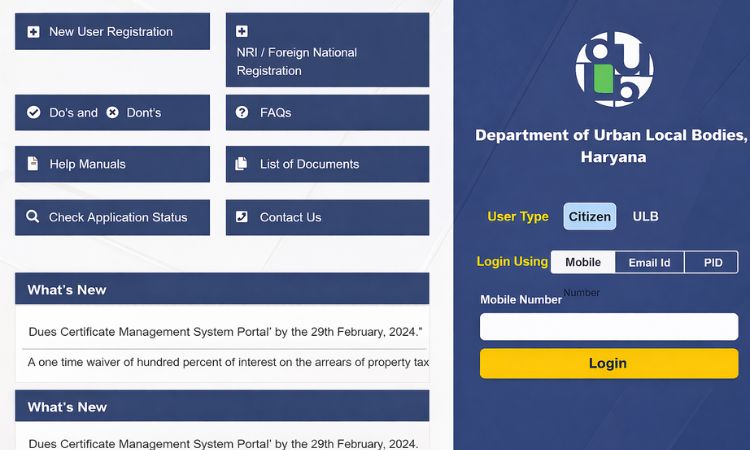
NDC Portal Haryana
The NDC Portal of Haryana serves as a centralised platform for all Individuals to access the Haryana NDC System, i.e. the Haryana NDC Portal. The Haryana NDC Portal aggregates and combines the Data of all Urban and Municipal Governance Departments into a single dashboard.
Some of the Primary features of the Haryana NDC Portal:
- Secure Area / Role Based Access for Government Officials
- Department & ULB-wise reporting of data.
- Dashboards displaying Performance Indicators.
- The ability for government officials to upload reports and data sets and to verify them.
- The ability for government officials to monitor the implementation of schemes and service level benchmarks.
The Haryana NDC Portal facilitates uniformity in data submissions, while also allowing higher authorities to monitor the progress of districts and cities.
Explore Premium Residential Projects in Gurgaon
| Projects | Location |
| M3M Mansion | Sector-113, Gurgaon |
| M3M Crown | Sector-111, Gurgaon |
| Hero Homes The Palatial | Sector-104, Gurgaon |
| Suncity Monarch | Sector-78, Gurgaon |
| Whiteland Westin Residences | Sector-103, Gurgaon |
| Signature Global Sarvam | Sector-37D, Gurgaon |
NDC Haryana Login: How Access Works?
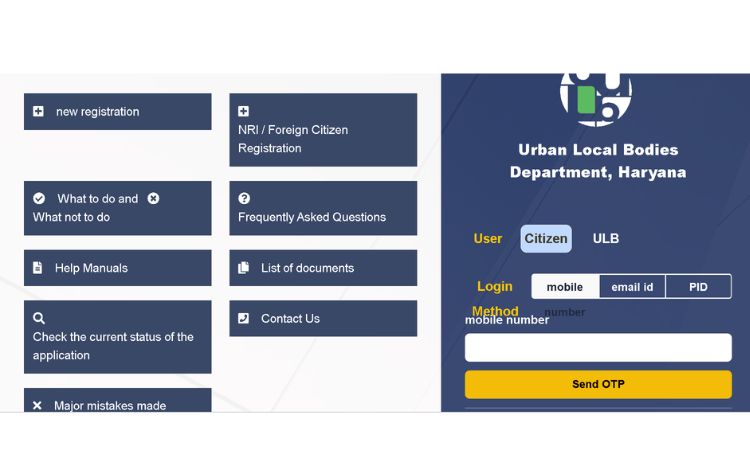
The Haryana NDC Login System is only available to authorized users. Access credentials are issued by the relevant department or by the state authority that operates the platform.
The Steps to Login:
- Obtain the Official Haryana NDC Portal
- Enter your Registered User ID & Password.
- Proceed through the Login/Authentication Steps (in some cases, via OTP).
- There are different Levels of Access depending on your role; Depending on whether the user is a state department employee, district government employee, or urban local body employee, there are multiple levels of access.
How to Create a User Account on NDC Haryana Portal?
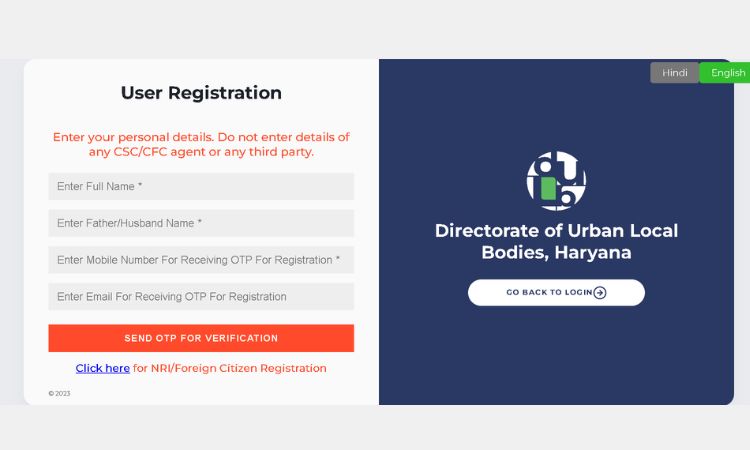
To access municipal services (property tax payment, downloading certificates, viewing details) through the NDC Haryana website, users must create an account on the NDC portal.
Steps to Register as a New User on NDC Portal Haryana:
- Go to the official NDC portal Haryana managed by Urban Local Bodies in the state.
- Click “New User Registration”
- Follow the link for registering as a new user, generally available on the main login page.
- Enter Basic Details
- Complete the registration form by providing: Name of property owner, Mobile number, Email address, ULB or city selection
- Verification of Mobile Number: A one-time password (OTP) will be sent to your registered mobile number for verification purposes.
- Create Login Credentials: Once verified, create your username and password to log into NDC Haryana in the future.
- Account Activation: After successful registration, the user account will be activated for use as a means of accessing services related to your property.
How to Find Your Property ID (PID) on NDC Haryana Portal?
Property Identification Number (PID) on the NDC Haryana portal The PID (Property ID) is assigned to every registered property and is a unique number identifying each property with respect to Urban Local Bodies (ULB) in the State of Haryana.
It is required for online property tax payments as well as for any downloading of certificates.
What is a PID in relation to the NDC Haryana Portal?
- PID stands for Property Identification Number
- PID can be used to identify ownership, location, and tax record for each property.
- PID is used to identify each property across all services provided by NDC Haryana by all Urban Local Bodies (ULBs).
How to Locate Your PID number on the NDC Portal?
- Log in to the NDC Portal.
- Use your user credentials to log in to the NDC Haryana login page.
- Once you are logged in, follow through to either “Search Property” or “Property details.”
- Search for your PID.
- To locate your PID, select one of the following criteria: Owner Name, Mobile Number, House Number, Colony Name or Locality, City/ULB Name.
- View Property information
- Once you have located your property, you will see your PID, your property tax status, and your ownership information.
Importance of the PID Number in relation to the NDC Haryana Portal
- Property Tax is required to pay online through the NDC Haryana portal.
- To download a No Dues Certificate from the NDC Haryana Portal.
- For any updates to the property, including the updating of ownership information.
How to Make Online Property Tax Payment on NDC Haryana Portal?
To make a payment on the NDC Haryana Portal, all Property Owners can now pay their Municipal Property Tax on-line and not have to go into the ULB office(s) for the same.
These are the Steps for making online Property Tax Payments
- Log onto the NDC Haryana Portal
- Your registered user id and password are required to log onto the NDC Portal.
- Enter your correct PID in order to obtain the Tax Information on the property.
- Verify Property and Tax information
- The system displays: Property type, Annual tax bill amount, Any outstanding dues.
- Select Payment Option
- Select your assessment year and click on the payment button to continue with your payment.
- Make Online Payment: You can make your payment(s) by debit card, credit card, Net banking, UPI
- When your payment is completed, you will receive a digital payment receipt to be stored in your NDC account.
Benefits of Online Property Tax Payment through NDC Haryana Portal
- Immediate Confirmation that the Payments has been made
- Transparency on how much is Owed
- Faster Processing of Payments (minimum processing time)
- Security of Digital Payments
How to Download No Dues Certificate (NDC) from NDC Haryana Portal – Step-by-Step Process?
A No Dues Certificate is an official confirmation from the State Government of Haryana that the property has no outstanding legal liabilities for property taxes. A No Dues Certificate may be needed to transfer ownership of a property to an individual via a Mutation or via the sale of a property, and as proof of ownership in a court of law.
To obtain a No Dues Certificate NDC, the following two conditions must be met:
- You must first ensure that all property taxes associated with the property are paid in full.
- The Property Details for the specific property must be current (i.e., verifying) and Up to date and PID (Property ID) must still remain registered and active in the NDC-Haryana portal.
Follow the Steps Below to Obtain A No Dues Certificate NDC
- Log into the portal: Visit the NDC Haryana portal and log into your account using your registered login credentials.
- Find the Certificates or Services section: Locate the options for Certificates or Property Services and select either one of these options, whichever applies to you.
- Choose the No Dues Certificate option: Select the option to Download a No Dues Certificate (NDC).
- Input the Property ID (PID): The System will check if the PID you entered is associated with a property that has no outstanding taxes.
- Download the No-Due Certificate: The No-Dues Certificate can be downloaded as a PDF file attachment once verification is complete.
How the No-Due Certificate is Utilized in Haryana?
- Selling or Transferring Ownership of Property
- Processing a Loan on a New Home or Mortgage
- For Legal Documentation
- Verify Ownership of Determined by a County Recorder or Clerk
ULB Haryana NDC: Role of Urban Local Bodies
ULB Haryana NDC is the partnership among Urban Local Bodies (such as a municipal corporation, a council, and a committee) and the ULB Framework of NDC.
Urban Local Bodies are responsible for:
- Regular data entry related to civic services
- Reporting to state governments on sanitation, water supply, property tax, and infrastructure
- Updating the status on the progress of urban schemes from both the state and the central government.
- Ensuring that data submitted on time and is accurate.
Because of ULB Haryana NDC integration, the state government gains a clear, real-time picture of urban performance across cities and towns.
Also Read – What is RERA in Real Estate?
Importance of NDC Haryana for Urban Governance
NDC Haryana has significant implications because it will make it easier for multi administrative layered governments to conduct business.
Key benefits include:
- Transparency of data increases public accountability by decreasing the chance of error in reporting.
- By reducing or automating the process of reporting, it decreases the amount of time involved in completing the reports; therefore, the reporting process will be more efficient. Minimizing paperwork and delays.
- The use of real-time dashboards allows the government to monitor the state of the different areas by being able to identify any gaps and/or problems quickly.
- Policy support: Real-time data from the ULB Haryana NDC provides the necessary resources to help plan for the planning of future urban policies.
The platform supports Haryana’s broader vision of digital governance and smart urban management.
Data Security and Compliance
Considering the sensitive nature of government data, the NDC Haryana portal adheres to established security standards, which include controlled access to data, encrypted data storage and routine audits of our systems.
Only authorized users have access to view and alter data to ensure compliance with government IT and data protection standards.
Future Scope of Haryana NDC
With the evolution of Digital Governance, Haryana NDC will continue to grow in terms of scope. This growth will include the integration of more departments, the use of advanced analytical methods, use of GIS based monitoring tools, and further, improved interoperability between state/NDC and national platforms at the central level; thereby, hopefully improving decision making within the state and urban planning.
Conclusion
The NDC Haryana portal acts as an extensive data-driven, digital infrastructure for delivering property-related municipal services across the State of Haryana.
As a centralised digital resource for the delivery of these services, the NDC has been designed to promote transparency, efficiency, and user-friendliness. With increasing adoption by ULB Haryana NDC, the platform continues to strengthen digital urban governance in Haryana.
By enabling centralized shared data reporting; enabling immediate monitoring of progress against targets, and structured analysis of data provided by the respective Urban Local Bodies, it plays a vital role in improving the efficiency and transparency of urban administration.
With active participation from Urban Local Bodies and departments, the Haryana NDC framework continues to strengthen the state’s governance ecosystem.
Read On – Global City Gurgaon
FAQs
1. How to get NDC for property in Haryana?
Log in to the NDC Haryana portal using your registered ID. Enter your Property ID (PID), make sure all dues are cleared, and download the No Dues Certificate from the services section.
2. How can I check my property ID online in Haryana?
Visit the NDC Haryana portal and go to the Property Search option. You can find your Property ID by entering details like owner name, mobile number, house number, or locality.
3. What is NDC in Haryana?
NDC stands for No Dues Certificate. It is an official document issued by the Haryana government confirming that no property tax is pending on a specific property.
4. How to generate NDC?
First, clear all pending property taxes. Then log in to the NDC Haryana portal, select the No Dues Certificate option, enter your PID, and download the certificate online.
5. How to check NDC Haryana?
You can check your NDC status by logging into the portal and entering your Property ID. The system will show whether your property has any pending dues or if the certificate is available.
6. Is property ID compulsory in Haryana?
Yes, Property ID (PID) is mandatory for paying property tax, updating ownership details, and downloading certificates through the NDC Haryana portal.
7. How do I find a property ID in Haryana?
Log in to the NDC portal and use the Property Search feature. Enter basic details like owner name, mobile number, or house number to locate your Property ID easily.