News Elementor

Latest Posts

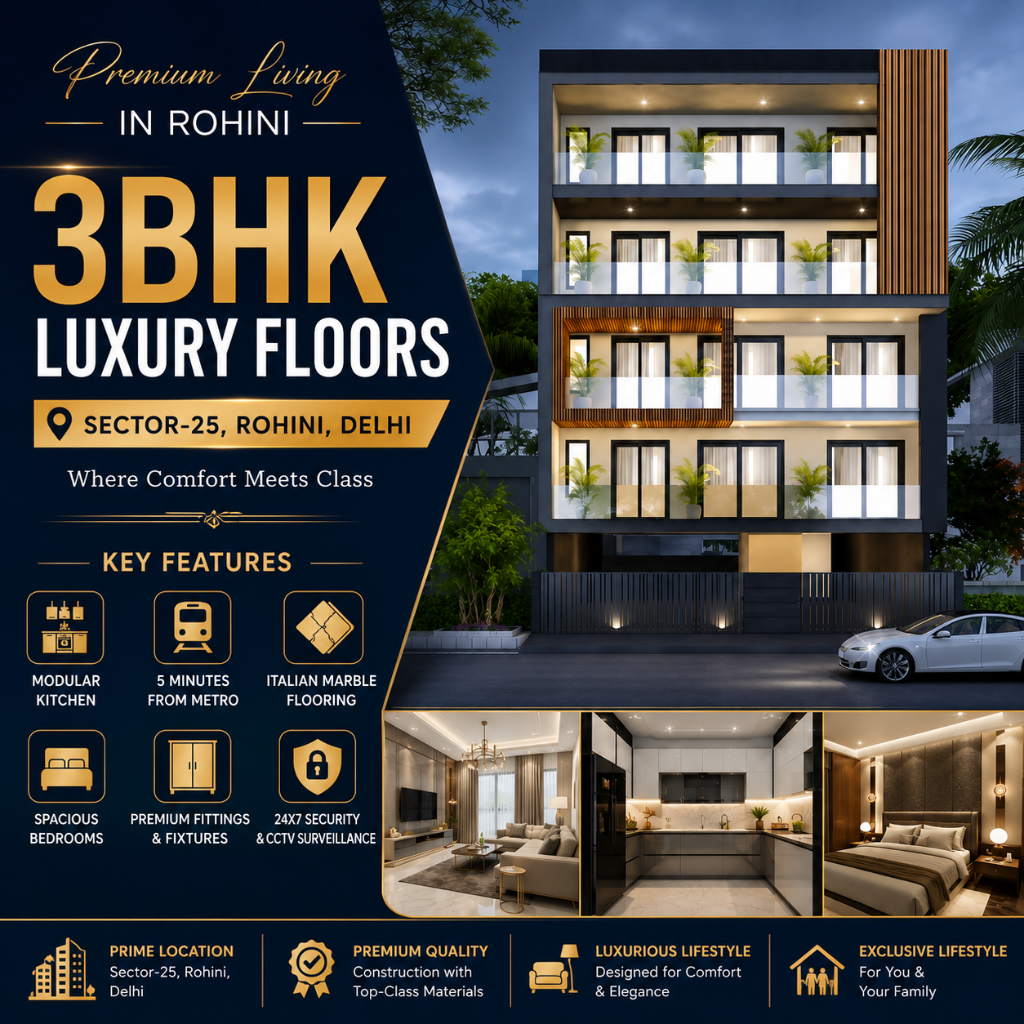
top reasons to buy or invest in rohini

Why Rohini Is a Smart Choice for Homebuyers & Investors? 

Rohini was the first sub-city project built by the Delhi Development Authority (DDA) in the 1980’s, and has a long history of being a thriving residential community for people of all income ranges. Rohini, located in North Delhi, has more than 50 sectors, excellent social infrastructure and connectivity.  So, what makes this area of North Delhi a great place to buy a home or invest?   The old historic feel of North Delhi can be felt when you visit any part of North Delhi, including Rohini in North-West Delhi. Like many other parts of North Delhi, Rohini has all the services necessary for everyday living, including schools and hospitals, as well as quick access to many of the major commercial areas in the region.   There are all types of homes in this area, such as builder floors or apartments. This article looks into the investment potential of this region by examining the areas within Rohini that represent the best sector for an investment; the current market values for property within the area and what has been the increase in price since initial construction of the building.   Rohini, located on the outskirts of Delhi, is a popular community in which to live that has both independent floors and apartments throughout the community. It is easy to find commercial activity or popular places to go when you are near Rohini, such as Pitampura or Mangol Puri, Badli Village, Mukarba Chowk, Shahbaad, Daulatpur or Bawana, Also the Delhi Technological University [DTU]. Best Sector to Live in Rohini, Delhi With more than 50 well-planned sectors complete with parks, community halls, and retail shops, Rohini’s sectors can provide a variety of living options for its residents. The largest of these is Sector 3 and the smallest sits within the second sector; therefore for those looking at mid-income family homes in Rohini, both 11 & 24 are the ideal sectors. For those with investment in mind there are also Sector 9, 13 and 14 may be ideal for purchasing apartments or flats in Delhi. If you’re looking to purchase a property ready to occupy then Sector 16 would also have properties available.  Few Popular Sectors to live in Rohini, Delhi are:   Sectors 1-10 These sectors are surrounded by Budh Vihar, Mongol Puri, Shalimar Bagh, Pitampura, Rithala, etc., which means they have good connectivity to the rest of Delhi through the use of Outer Ring Road or the Bhagwan Mahavir Marg, as well as through the use of the Mongolpuri Flyover.  Sectors 11-20 These sectors have good access via NH 9, NH 44, and Kadambari Road.  Sectors 21-30 These areas are well connected by both roadways as well as the Metro; key stretches of roads in these locations include: Western Yamuna Canal Link Road; Dr. KN Katju Marg; NH-44. Sectors 31-40 These localities include the Rohini Heliport and have access to key roadways getting into/out of these sectors, including Kanjiwaha Road; Jat Ram Marg; Bawana Road.  Sector 41 This sector is within close proximity to Inder Enclave, Agar Nagar, and Pratap Vihar  What are the top Factors Influencing Housing Demand in Rohini, Delhi? Rohini is a very desirable and thriving place to invest for a number of reasons. You can summaries the main reasons for this investment in Rohini into five categories:  Relatively Affordable Property Prices  The majority of the residential units in Rohini consist of DDA housing in the forms of Lower Income Group (LIG) and Middle-Income Group (MIG) housing categories. The average price for property in the Rohini area at this time is approximately: There is a great deal of price variation in property throughout the Rohini area based on the zoning and sector in which you purchase properties. The table below shows the prices for various properties currently for sale in some of the best sectors in Rohini:  Rohini sectors  Price per sq. ft.  Sector 8  Rs 15,800  Sector 9  Rs 16,650  Sector 13  Rs 15,200  Sector 14  Rs 18,000  Sector 18  Rs 11,750  Sector 23  Rs 8,950  Sector 24  Rs 8,850  Sector 28  Rs 7,800  Sector 35  Rs 13,200  Reliable Rental Income  A consistent rental income is another reason to think about entering the real estate market in Rohini. For example, the maximum rental price for a 2BHK builder floor would be approximately Rs 40,000 per month. On average, 2BHK apartments in Rohini could rent for between Rs 35,000 to Rs 38,000 per month.  Similarly, the maximum rental for a 3BHK apartment or flat would be approximately Rs 65,000 per month while the maximum rental, on average, for a 3BHK builder floor would be Rs 55,000 to Rs 75,000 per month. If you find yourself renting in areas that are close to the Rithala Metro Station, Maharaja Surajmal Stadium and the main road, you will likely be faced with higher rental prices. Examples of these sectors include: 14, 19, 20 and 21.  Well-connected with micro-market  Rohini is situated in the heart of North Delhi. It is a well-developed location and close to all essential like schools, metro, hospital, malls etc. It offers seamless connectivity to major parts of Delhi and NCR.   Rohini is well-connected to metro stations like Rohini East, Rohini West, Rithala Metro Station. These stations are situated along the Red Line of the Delhi Metro.   This location is well-connected via Outer Ring Road, Ring Road, NH-44 (GT Karnal Road) and Rohtak Road. You can quickly reach IGI Airport, ISBT Kashmere Gate and other important locations of Delhi.   You will also enjoy seamless daily commuting to work in Noida, Gurgaon and in Delhi’s office sectors because both NH-9 and NH-44 are quickly accessible from the area. The distance from New Delhi railway station is approximately 20 km, while the nearest railway station to Rohini (Shakur Basti) is approximately 9 km away.  Strong Social Infrastructure  Rohini has excellent social infrastructure, and there are numerous well-known academic institutions within a radius of 6 km of the locality. Among the educational institutions are; the Bhagwan Parshuram Institute of Technology, the Delhi Institute of Advanced Studies, the Delhi Technological University and the Fire Safety Management Academy. There are also many Healthcare institutions close to Rohini. For example, Dr. B.R. Ambedkar Hospital, Shubham Hospital and Springdales Hospital are located between 4 km and 8 km from Rohini. Below is an overview of some of the key facilities available in Rohini:   Commercial hubs  Netaji Subhash Place, Bawana Industrial Area, Narela Industrial Estate  Accessibility  New Delhi Railway Station at 19.5 km, Served by three dedicated metro stations on Red Line- Rohini East, Rohini West and Rithala, Old Delhi/Delhi Railway Station at 19 km, Azadpur Bus Terminal at 12.5 km, IGI Airport at 29 km   Schools & colleges  Delhi Technological University, Mount Abu Public School, Jindal International School and...
Read more
Lucknow Kanpur Expressway

Lucknow Kanpur Expressway – Status, Opening Date, Map, Update & More

After the Purvanchal and Ganga Expressway, Uttar Pradesh gets its next expressway, and that is the Lucknow Kanpur Expressway. You can also call it “Awadh Expressway.” It is a major new infrastructure project in Uttar Pradesh designed to reduce travel time between Lucknow and Kanpur. It is a 6-lane access-controlled expressway that will cut travel time and boost regional connectivity and economic growth. The length of this expressway is 63km. The approved budget for the construction of this expressway is Rs. 4,700 crores. According to NHAI, construction of the Awadh expressway began in January 2022. The project is expected to enhance regional economic growth, strengthen urban–industrial links, and significantly improve the overall travel experience between Lucknow and Kanpur. In this article, we will explore Lucknow Kanpur Expressway, its Status, Opening Date, Key Features, Economic aspects, and more. So, let us start this blog. Lucknow Kanpur Expressway Overview Feature Data Total Cost ₹4,700 crore Length Approximately 63 km Total Lanes 6-lane highway Reduced Travel Time 35-45 minutes (current time: 3 hrs) Current Status 80% complete Expected to open (new opening date) (Earlier was May-June 2025); now it is expected to open in March 2026 Next-gen Technology Used AIMC (Automated & Intelligent Machines) Starting at Shaheed Path, Lucknow Connecting Lucknow Ring Road, Agra-Lucknow Expressway Ending Point Nawabganj, Kanpur Lucknow-Kanpur Expressway Opening date This expressway project is anticipated to be open for public use during March 2026. Lucknow Kanpur Expressway – Travel Time & Project Cost The Lucknow-Kanpur Expressway Project will be built along a 63 km corridor and will provide a time savings of approximately 30 minutes compared to the existing driving times of 1.5 to 3 hours. It will also have a cost of approximately Rs 4700 crore, and the corridor will be configured as a modern access-controlled route that will eliminate traffic congestion, enhance roadway safety, and reduce fuel consumption. This budget is issued for the entire project, including Bridges, underpasses and flyovers The Kanpur-Lucknow Expressway, which is to connect to the Ganga Expressway, will complement the significant reduction in distance and time needed to travel from East to West and Vice-Versa in UP. Lucknow-Kanpur Expressway Route Map This expressway consists of 62.76 Kms (39 miles) connecting: Starting Point: Shaheed Path in South Lucknow Ending Point: Azad Chauraha near Kanpur’s Ganga Bridge The expressway traveling parallel to NH-27 and will reduce the time between the two cities by approximately 50 minutes compared to the current 2-hour trip. Also Read – Delhi Mumbai Expressway Lucknow-Kanpur Expressway: Current Progress Currently, approximately 80% of the construction is completed with work progressing rapidly using AMG technology, according to NHAI personnel using 3D automatic machine-guided (AMG) technology. The Lucknow-Kanpur Greenfield Expressway, which will utilize the latest technology and improve connectivity and high-speed travel for commuters and businesses, is anticipated to transform travel between the two cities, reducing travel times to 40-50 minutes. This ₹4700 crore investment will prove to be a game changer for businesses and commuters in Uttar Pradesh. Kanpur Lucknow Expressway: Economic Impact This expressway will have a tremendous impact on the economy of the region and will likely benefit farmers, students, businesses, and industries by improving their ability to reach markets, access educational institutions, and receive healthcare as well as find employment opportunities; thereby, supporting the development of the UP economy as it will serve as a catalyst for improving these areas. The expressway will make it easier for people to travel to educational institutions of all types in the vicinity of Lucknow and Kanpur. It will facilitate movement of students from rural areas to urban universities and other educational facilities as well as create new opportunities for economic growth and development at the local community level. Therefore, this road project will serve as the catalyst for substantial change between these two great centres of Learning in Uttar Pradesh. Future Ready Infrastructure As per the National Highways Authority of India (NHAI), the development of the new Lucknow – Kanpur Expressway represents a major breakthrough in the field of infrastructure development in India because it has successfully addressed many of the challenges associated with building complex infrastructure. In addition, the new expressway has been constructed with the application of a variety of cutting-edge engineering technologies including: The construction of multiple vehicular and pedestrian underpasses, box culverts, reinforced soil (RS) walls, and well-planned interchanges intended to facilitate the safe and efficient movement of traffic through the system, as well as to provide access points for pedestrians along with an adequate stormwater management system. Lucknow-Kanpur Expressway Key Features The National Highway Authority of India (NHAI) has pioneered the use of Automated & Intelligent Machines (AMIC) for the first time in India. These machines are equipped with the following capabilities: Conclusion Overall, the Lucknow-Kanpur Expressway will be a game-changer project for Uttar Pradesh. It will offer faster, safer, and smoother connectivity between these two cities. This expressway will encourage industrial and real estate growth along the corridor and reduce travel time and traffic congestion. It will strengthen economic activity and improve daily commuting. FAQs
Read more
Jewar Airport Noida

Jewar Airport Noida – Location, Opening Date, Status & More

Jewar international airport- officially known as The Noida International Airport, Jewar, is set to be one of the most advanced and largest aviation hubs in India. Planned to ease footfall at the IGI Airport, Delhi, and to make Noida-Greater Noida-Yamuna Expressway a global economic hub, this new airport is already making news, attracting investors, and defining future travel for millions. The project is one of the most ambitious infrastructural developments in India, which has ultra-modern terminals besides smooth multimedia connectivity. This blog will cover it all such as the Jewar Airport Noida Location Map, the current status of construction, date of opening, distance to major cities and the current updates. Jewar Airport Noida Overview Aspects Details Official name of Jewar International Airport Noida International Airport Location of Jewar Airport Jewar, Gautam Buddha Nagar District, Uttar Pradesh, India Date of commencement of construction of Jewar Airport June 2022 Date of Opening of Jewar Airport (Phase I) August 2026 (expected) Jewar Airport Code by IATA DXN Authority Noida International Airport Limited (NIAL) Powered by Yamuna International Airport Pvt. Ltd. (YIAPL) Type of Airport Public Status of construction Under-construction Jewar Airport Cost Rs. 29,650 crores Jewar Airport Area 1334 hectares (3296.386 Acres) Total Terminals 4 Terminal Total no. of Runways 6 Runway Runway length 4 km Jewar Airport official Website www.niairport.in Noida International Airport Actual Images Latest Update on Jewar Airport Noida The Jewar International Airport, located in Noida, India, aims to provide excellent service to Delhi NCR’s growing population. However, residents near the airport are still waiting for confirmation on its opening date as it continues missing open dates. Earlier this month, Union Minister of Civil Aviation Ram Mohan Naidu announced that the Jewar International Airport will open in February; however, official sources from the airport headquarters indicate some major parts of the development are not complete. Therefore, it is likely it will not open anytime soon. The estimated total cost of the Jewar International Airport’s first phase is approximately Rs 6,800 crores (approximately $1 billion), with the first official opening date estimated for September 2024. The airport spokesperson has stated that there has been no cost increase on the project; however, there have been approximately 17 months of construction delay. Recent reports indicated that construction was moving rapidly within the architecturally cohesive landscape at the Jewar International Airport and foundations will soon be laid for multiple sections of the airport. These reports and sources also revealed that the Jewar International Airport does not anticipate opening by the projected March date, as there are many construction activities remaining before the airport can actually begin operations. “I don’t think they will be able to open even in March 2026”, a source on the Jewar International Airport said, as there is still too much pending construction. Explore Premium Residential Projects Near Jewar International Airport Projects Location ATS Pristine Sector-150, Noida Experion Elements Sector-45, Noida Godrej Woods Sector-43, Noida M3M Jacob and Co Sector-97, Noida M3M Cullinan Sector-94, Noida What Makes Noida International Airport Special? 1. One of India’s Largest Airports in the Making Once completed, Jewar International Airport Noida is expected to handle 70 million passengers annually in its final phase. The airport will feature: Strategic Location: Crafted for effortless Connectivity The Jewar Airport Noida Location Map clearly shows why this spot was chosen — perfect for travellers from: Noida to Jewar Airport Distance About 40–45 km, making it easily reachable via: Jewar Airport Construction Status: Where Things Stand Today The construction is moving forward rapidly with: As per the latest updates on Jewar International Airport Latest News, the first phase is almost done, reflecting strong progress. Jewar Airport Noida Opening Date The expected opening date for Jewar International Airport is Mid 2026, allowing both domestic and international flights to begin operations. Once open, this airport is set to become NCR’s biggest aviation asset. World-Class Features & Future-Ready Infrastructure Noida International Airport promises: Noida International Airport – Economic Impact Jewar Airport Noida is expected to: The area surrounding the airport is already experiencing a boom, led by significant investments and new industrial corridors. Jewar International Airport Latest News Conclusion Jewar International Airport is not just an aviation project – it is also a publicity of the rising global potential of India. With world-class design, powerful connectivity, and a massive economic impact, the airport is set to rewrite NCR’s future and transform the entire region into a global business hub. FAQs
Read more
top 10 Posh Areas in Bangalore

Top 10 Posh Areas in Bangalore in 2026: Most Expensive Areas

Bangalore, frequently referred to as Silicon Valley of India, was established to be one of the most technologically advanced cities as well as having desirable residential areas suitable for a number of living and investment preferences. The city consists of many premium areas, such as the leafy traditional-style neighbourhoods and the modern tech-oriented suburbs that provide stylish living, strong infrastructure, superior education, and high value real estate. In addition to these two categories there are many more types of posh areas in Bangalore. Each of these residential locations provides residents with the convenience of having access to basic necessities while offering the ultimate way to enjoy an upscale lifestyle through high-end amenities, excessive green space and the highest security and exclusivity. This article provides a complete overview of the richest residential localities in Bangalore with the following information; Industry Trends, Investment Insights, Price Trends, Key Amenities and Future Growth. List of Posh in Bangalore in 2026 S.no. Posh Areas of Bangalore 1. Koramangala 2. Indiranagar 3. Jayanagar 4. Whitefield 5. Sadashivanagar 6. Rajajinagar 7. HSR Layout 8. Malleshwaram 9. Lavelle Road 10. Richmond Town 1. Koramangala – Among Posh Areas in Bangalore Pincode – 560034 It is one of the best places to live in Bangalore, thanks to the combination of numerous offices, restaurants and recreational areas. Koramangala is comprised of premium residential enclaves, well-developed start-up industries, co-working spaces, a wide selection of dining options and entertainment venues.  With increasing numbers of offices, restaurants and entertainment venues, Koramangala has the perfect balance between residential comfort and commercial activity. It is one of the best neighbourhoods for people who want to live a busy urban lifestyle because of the options available. Koramangala also has a high level of social activity and provides residents with many opportunities to meet new people and experience an exceptionally diverse mix of cultures. Trends in properties in Koramangala: High prices relative to other areas, high rental demand, excellent lifestyle quality so it is highly attractive for reselling and/or appreciation. Property prices: Rs. 19,828 per sq. ft. 2. Indiranagar Pincode – 560038 Indiranagar stands firm at the 2nd rank in the list of top 10 posh areas in Bangalore. It offers a cosmopolitan lifestyle to its residents and has a unique blend of modern-day living with traditional values. Not only are there many dining and shopping options, but you can also find homes of very high quality and design, something that is uncommon in most other neighbourhoods in Bangalore; whether you’re looking for a boutique, an upscale cafe, or luxury accommodation, all these can be found in Indiranagar. It has a busy urban community atmosphere with upscale lifestyles and is one of the fastest growing and most dynamic areas among most expensive areas in Bangalore.  Property prices: Rs. 14,150 per sq. ft.  Also Read – TOP 10 Best City to live in India 3. Jayanagar Pincode – 560011 Heritage charm meets structured planning. Broad, green avenues, parks, and community culture make it ideal for families. Real estate here is stable, premium, and less volatile. In addition to that, there is a great number of shopping centres and traditional markets located close by; the area also has a significant number of cultural amenities, such as theatres and museums, allowing people to experience both the past and present at the same time. Because of this, many families choose to live in the area due to the proximity of highly regarded schools and hospitals.  Property prices: Rs. 16,226 per sq. ft. 4. Whitefield – Among Most Expensive Areas of Bangalore Pincode – 560066 Once a quiet suburb, Whitefield is now a major residential and IT hub with high-rise apartments, gated communities, and top-tier amenities. Whitefield is located on the eastern side of Bangalore (Bangalore Urban District), via PIN code 560066; originally established as an English community and later as a multicultural community. The IT industry in Bangalore contributes primarily to the overall economic growth of Bangalore, while attracting professionals from all over India and around the world.  Property prices: ~Rs. 10,103 per sq. ft.  5. Sadashivanagar Pincode – 560080 One of the oldest elite neighbourhoods in Bangalore, featuring sprawling bungalows and tree-lined avenues. It is home to many dignitaries and long-established families. Sadashiva Nagar was originally named as “Palace Orchards” which refers to the historical royal estates of Bangalore Palace. The name was subsequently changed to Sadashiva Nagar in honouring Karnad Sadashiva Rao who was an Indian freedom fighter and philanthropist.  Sadashiva Nagar has become known as being home to a number of opulent villas and luxury residential properties owned by some of the most respected business, entertainment, government, and affluent families in Bengaluru.  Property prices: Rs. 32,073 per sq ft  6. Rajajinagar Pincode – 560010 Lush and well-connected, Rajajinagar is gaining traction with new developments and community infrastructure, blending tradition with modern living. Rajajinagar is an ideal family-oriented neighbourhood where the community has a very practical, non-flamboyant environment that promotes reliability and good access to services. The lifestyle of families in Rajajinagar has earned the area a recognition as one of the richest neighbourhoods in Bengaluru.  Property prices: ~Rs. 20000+ sq ft  7. HSR Layout Pincode -560102 A favourite among families and professionals for its planning, parks, and quiet streets. Its connectivity to IT corridors and future metro make it a smart investment. Property prices: ~Rs 15,000- 18000 Per SQ. FT. 8. Malleshwaram Pincode -560003 Well-established and leafy, Malleshwaram balances heritage with modern comforts. It is popular with families and professionals alike thanks to its location and community vibe. It is named after famous temple Kaadu Malleshwara. Malleshwara has now adopted a cosmopolitan character as one of the historically rich areas, with multi-storey apartments replacing many large bungalows. It has mixed populations, comprising large families of middle and upper-middle incomes. Retail and wholesale shops on Sampige Road, the 11th Cross Flower Market and legendry eateries on the Margosa Road has attracted all type of people.  Property prices: Rs. 15,541 per sq. ft. 9. Lavelle Road Pincode -560001 One of the most prestigious thoroughfares in the core city, known for luxury apartments, executive living, and proximity to flagship malls and CBD offices. Property here commands a...
Read more
Freehold Vs Leasehold Property

Freehold Vs Leasehold Property: Key Differences, Meaning & Ownership Rights

In India, real estate may be either freehold or leasehold. Many of you who have attended hearings about government proposals to convert certain parcels of property from leasehold to freehold may already have heard of this topic. You wonder what you should know about freehold property, how it is different from leasehold property, what benefits you would get by owning freehold property, your rights as an owner of freehold property, the documents needed to buy freehold property and a lot more. An understanding of freehold Vs leasehold property should assist you in making wise decisions about your real estate purchase/sale/investment, and is therefore helpful for both first time home buyers and experienced real estate investors. What is Freehold Property?  A freehold property means the buyer has complete ownership of both the property and the land it stands on. Once purchased, there is no limit to how long the buyer will own the land/property or for how long the property will exist (The only limitations on what the buyer can do with the property are the laws of the jurisdiction). In addition, the owner has the right to sell the property at any time or lease it to anyone. Freehold properties have clear ownership rights, making them worth more. These properties are also easier to sell and banks prefer freehold properties when giving out home loans. The homeowner (freeholder) is required to maintain the property without the involvement of anyone else. The freeholder has the right to stay in the property for as long as they own it. What is Leasehold Property? Leases indicate that you own the property for a specified period of years; however, the land itself continues to be owned by the landlord. Lease periods can last anywhere from one to ninety-nine years and then become the property of the landlord again. Generally, all sale or transfer transactions require the consent of the landlord. Leasehold properties tend to cost less than freehold properties and banks will tend to impose stricter loan terms due to a less than indefinite ownership period. If you wish to extend your lease on a leasehold property, then there may be an extra cost associated with this. Leasehold properties are usually found in areas owned by government or authority. Also Read – What is BBA in Real Estate Difference Between Freehold and Leasehold Property If you want to see the difference between freehold and leasehold properties, then you may want to check this extensive list below: Name Leasehold Freehold Time period Lease duration can be of 1, 30, 60, 99 years No tenure restrictions Ownership rights Leaseholder has the right to occupy the property for a fixed term, post which the land ownership is retained by the original owner Owner has complete ownership of the land and property indefinitely Transfer of Ownership Requires the original owner’s consent and a transfer fee may be applicable Easy to sell, transfer, or gift without restrictions Maintenance responsibility Landlord is typically responsible for the building structure, while the leaseholder may handle interiors Owner is fully responsible for maintenance and repairs Property price and value Generally lower value due to limited ownership rights and lease renewal considerations; value can depend on the remaining lease period Usually higher due to complete ownership rights Pros and Cons of Freehold Property  Pros of Freehold Property Cons of Freehold Property Pros and Cons of Leasehold Property Pros of Leasehold Property Cons of Leasehold Property What are the steps to convert a Leasehold Property to a Freehold Property? How to sell a Freehold Vs leasehold Property? Challenges & key Differences: It is important that you are knowledgeable about the process of buying a freehold or leasehold prior to purchasing a property, especially for an investor. Generally speaking, it is easier to sell freehold properties than leasehold properties because the selling process for freehold properties consists of forming a sales agreement with the buyer, and registering the deed at the sub-registrar’s office.  To sell a leasehold property, the seller must first submit the proposed sale to the governing body that owns the land under a ‘Memorandum of Transfer’ form. This is done after being granted permission from the governing body to sell, known as memorandum of transfer. The buyer and seller must also sign the memorandum, at which point the sub-registrar will validate both parties’ signatures, and 1-2 weeks later, the buyer will receive a sub-lease.  Although the sale of leasehold properties may vary slightly by removing or adding to a municipality’s by-law, you should obtain guidance from an attorney or another knowledgeable real estate professional before selling leasehold property. Generally speaking, freehold property provides you (the buyer) with complete ownership, more flexibility when selling, and more access to mortgage loans than leasehold properties, although you can typically sell leasehold property for much less than you can full ownership, as well as significantly lower maintenance costs. For this reason, it is essential that you weigh out all pros/cons of each type before making your purchase offer. Can the government take back (reclaim) freehold land? Freehold property gives you the right to full possession of the buildings and land you have purchased, which now raises the question of how the government can take back ownership of your land? Despite the kind of land you have, the government can decide to take it back if the land is in the way of developmental activities like industrialization or urbanization. You will, of course, be paid a fixed per sq. ft price based on the land. Rights of the Owners of Freehold Properties As mentioned above, one of the best benefits of freehold property is complete freedom. Below are all the possible rights that freeholders may use and take advantage of when using, occupying, utilising and/or owning their properties: FAQs
Read more
reasons to invest in Dubai Real Estate

Top 10 Reasons to Invest in Dubai Real Estate in 2026

Over the past few years, Dubai has established itself as a premier destination for international real estate investors. With a combination of tax-free policies, world-class infrastructure, and robust rental yields and capital appreciation, it is no surprise that the Dubai property market is experiencing a period of sustained growth. Based on data from the first half of 2025, Dubai experienced significant growth in both the number of transactions and the total dollar value transacted, with millions of square feet sold and significant growth year over year in the dollar amounts received for transaction values. Below we present you with our Top 10 reasons why Dubai is still a leading choice for international real estate investors along with supporting factual market data and recent trends, including examples of actual returns on select properties. 1. No Property Taxes Among the multiple benefits of investing in Dubai real estate is the lack of taxation on ownership, capital gains, and rental income; therefore, investors retain 100% of their profits when selling or renting out property in Dubai and comparatively to other Western markets where taxes are extremely high on returns to investors. Why it’s important: This tax neutrality boosts net profitability and makes investment calculations far more attractive. 2. Strong Rental Yields and Cash Flow The rental yields in Dubai are among the highest globally, typically averaging between 6% and 10%, depending on where the property is located as well as the type of property. Typical average yields (2025 estimates) These returns are significantly higher than many Western cities where yields often sit between 3–5%. 3. Capital Appreciation and Market Growth Dubai’s property market has experienced a tremendous amount of price appreciation, which can be attributed to strong demand for properties from both local residents and international investors. As a result of the increasing demand for real estate, average residential property prices have risen dramatically, with most segments of the residential market experiencing an increase in average residential units by approximately 20% from 2024 to 2025, while specific segments, such as luxury and villas, have experienced even higher increases in value. Continued high demand and limited supply in the most desirable areas will continue to support the growth of asset values over the long term. 4. Global Business and Tourism Hub Dubai is centrally located between Asia, Europe, and Africa, and serves as a global hub for businesses and travel. In 2024, as a result of the growing Tourism Industry, over 17 million international visitors were welcomed into the country. Investors have tremendous opportunities to create income from short-term rentals and vacation rentals as a result of their desire to attract tourists. Dubai’s global reach means there will continue to be a strong demand for property by both residents and tourists. 5. Diverse Population and Expat Demand The demographic growth of Dubai and the influx of workers and families from around the world are creating a large expatriate population, which keeps demand for rental properties strong. Population growth in conjunction with the new residents being introduced to the housing rental market will not only create long-term demands for homes but also for rental. 6. Investor-Friendly Ownership Regulations The advantage of having investor-friendly rules and regulations regarding ownership of real estate in Dubai is the ability of foreign investors to own real estate with full freehold title in specifically specified areas. This contrasts with the majority of other global cities that would have limitations on foreign ownership. Furthermore, the ownership of real estate in Dubai has a strong legal framework and well-established systems in place to ensure proper governance and protection of real estate ownership, such as the Dubai Land Department and the Real Estate Regulatory Agency. 7. High Transaction Volume and Market Liquidity As one of the fastest-growing real estate markets in the world, Dubai’s real estate environment will provide investors with a very healthy level of liquidity to support a large volume of transactions. In just the first half of 2025 there have already been substantial increases in both volume and total value of transactions compared with 2024; therefore, it is likely that Dubai’s real estate market is trending positively. Liquidity offers investor confidence that they will always be able to enter or exit the marketplace as needed. 8. Flexible Payment and Off-Plan Options In addition to having a growing real estate market, developers in Dubai typically have post-handover payment plans as well as payment plans for off-plan purchases. These options provide investors an opportunity to invest into an asset at a lower price before completion and then pay for that space over the term of their agreement, thus maximizing returns and cash flow strategies. Additionally, off-plan investments take advantage of the low pricing of early stage investments and increase demand for real estate after the project is finished. 9. World-Class Infrastructure and Mega Projects The current and future development of Dubai’s infrastructure including expansion of metro systems, airports, new tourist attractions, etc. contributes to the strong continual demand for real estate in Dubai. New large-scale developments such as Expo City, Dubai Creek Harbour and others, will continue to attract interest, generate demand, and therefore create value for other real estate in Dubai. 10. Strong Economic Fundamentals and Stability The Dubai economy is very diverse and is resilient with several strong sectors such as trade, tourism, logistics, finance and real estate. This diversity and strength represent a stable platform for real estate investment. Additionally, Government initiatives to achieve sustainable economic development will continue to enhance investor confidence in Dubai real estate. Conclusion Overall, Dubai is among the top real estate investment destinations in 2026. This city is attracting top investors and homebuyers worldwide. The reason is its policy, tax-free ownership, strong rental yields, steady capital appreciation, and investor-friendly regulations. Dubai is one of the most efficient property markets in the world. This city is getting good benefits from population growth, rising tourism, infrastructure expansion, and a diversified economy that will ultimately increase the demand for housing. The major reason to buy or...
Read more
List of Cities in India

List of Tier 1, Tier 2, Tier 3 & Tier 4 Cities in India in 2026 – India’s City List

Indian cities have been categorised into tiers based on a mix of population size, infrastructure quality, economic development and level of urbanization as well as job market opportunity availability, levels of health services and educational attainment, level of transportation accessibility etc. This tier system helps policymakers plan urban development, allocate resources, and provides useful insights for businesses and real estate investors. Generally, Tier 1 cities are the most developed and populous urban centres, while Tier 4 cities are smaller urban locales with basic infrastructure and lower economic activity.  In this article, we will explore Tier 1 Cities in India, Tier 2, Tier 3 and Tier 4 and their real estate trends and more. So, let us start this blog. How Cities Are Classified in India? Cities in India are classified into tiers based on a mixture of population size, infrastructure quality, economic development, and urbanization levels. One commonly referenced approach, for example; Reserve Bank of India and other Indian Government departments have established various methods for doing so. A common, but not exclusive, method of categorizing urban areas in India by Tier System is based on an approximate number of people that reside in each Tier, even if the Tier System is not the only means to determine Tiers, in general Tiers are defined as follows.  Population Based Classification Classification Population Rural centre Less than 10000 Semi-urban centre 10000- 1 lakh Urban centre 1 lakh- 10 lakh Metropolitan centre Above 10 Lakh What is Tier 1 Cities in India? Tier 1 cities in India serve as major metropolitan centers providing economic activity through advanced infrastructure, access to employment opportunities, and increased cultural and educational, and commercial activity. Typical features are high concentrations of people with a strong ability to connect using airports as well as metro networks; strong access to healthcare and education resources. List of Tier 1 Cities in India Here is the list of tier 1 cities in India: S.No. Tier 1 Cities in India 1. Mumbai 2. Delhi 3. Bengaluru 4. Chennai 5. Hyderabad 6. Kolkata 7. Ahmedabad 8. Pune The tier 1 cities of India are the most important cities. They are the backbone of this country and are known for their strong economic activity, advanced infrastructure, and high standard of living. Delhi, Mumbai and Bangalore are among the top tier 1 cities in India. These cities offer top-notch education, better infrastructure, the Presence of Fortune 500 companies, and better healthcare facilities, among other things. Also, tier 1 cities have better connectivity, international airports, metro rail networks, and well-established social infrastructure. The common tier 1 cities in India are Delhi, Mumbai, Bengaluru, Chennai, Hyderabad, and Pune. These cities have high per capita income, large populations, and ample job opportunities. Key Characteristics of Tier 1 Cities A number of factors have contributed to the ranking of these cities as Tier 1 Cities of India: Real Estate Trends in Tier 1 Cities of India What is Tier 2 Cities in India? Tier 2 cities experience rapid urban growth due mainly to improvements in local economies, infrastructure, and commercial and residential real estate markets. Compared with Tier 1 metros, Tier 2 cities typically provide an advantageous combination of opportunity and cost-effective living. List of Tier 2 Cities in India 2026 S. no. Tier 2 Cities in India 1. Jaipur 2. Lucknow 3. Surat 4. Nagpur 5. Indore 6. Thiruvananthapuram 7. Bhopal 8 Coimbatore 9 Kochi 10 Patna  11 Vishakhapatnam 12 Agra 13 Ajmer 14 Kanpur 15 Mysuru 16 Srinagar The Tier 2 Cities in India are an alternative to metropolitan cities. These cities offer a lower cost of living compared to Tier 1 cities. Jaipur, Lucknow, Surat, Patna, and Nagpur are among the most common tier 2 cities in India. These cities are rapidly growing in different sectors like IT services, manufacturing, education, healthcare, and tourism. Our Government is also working to reduce the burden on Tier 1 cities by focusing on Tier 2 cities. Tier 2 cities of India, like Jaipur, Lucknow, Indore, Surat, and Kochi, have improved road networks, new airports, metro rail projects, and industrial corridors, which will make these cities more connected and business-friendly. Key Characteristics of Tier 2 Cities Real Estate Trends in Tier 2 Cities of India What is Tier 3 Cities in India? Cities that are Tier 3 contain smaller urban areas that are currently being developed. Since these cities have not yet completed development of the same size of physical infrastructure supporting either Tier 1-City or Tier 2-City, many Tier 3 Cities have seen Continued Gradual Increase in Connectivity, Job Creation, and Demand for Housing. List of Tier 3 Cities in India 2026 Here is the list of top Tier 3 Cities in India: S. no. Tier 3 Cities in India 1 Meerut 2 Bikaner 3 Udaipur 4 Salem 5 Nasik 6 Hosur 7 Etawah 8 Roorkee 9 Bhatinda 10 Hajipur 11 Rohtak 12 Jhansi 13 Madurai 14 Cuttack 15 Rajahmundry The Tier 3 cities in India are smaller and developing urban centres. These cities have lower populations but are improving their infrastructure. The economics of Tier 3 cities are mainly based on local industries, agriculture, small businesses, education, and regional trade. They play an important role in reducing the pressure on metropolitan and Tier 2 cities. Meerut, Udaipur, Roorkee, Jhansi, Bikaner, etc., are examples of top-tier 3 cities in India. These cities have shown steady improvements in road connectivity, public transport, healthcare, and educational facilities. Government initiatives, industrial corridors, and highway projects are helping develop these Tier 3 cities. Key Characteristics of Tier 3 Cities Real Estate Trends in Tier 3 Cities of India What is Tier 4 Cities in India? Tier city 4 consists of small towns and emerging urban clusters with limited or basic physical infrastructure and considerably lower levels of economic activity than that seen in Tier 1 or Tier 2 Cities. The cities in their current form act as a transition area between Rural and Urban Economies. List of Tier 4 Cities in India 2026...
Read more
Ganga Expressway

Ganga Expressway: Route Map, Status, Key Features, Completion Date & More

The Ganga Expressway project is the state’s most significant project for changing transportation, connection, economy, etc. It connects Meerut to Prayagraj (approximately 594 km), is 6 lanes wide with an access control, and will decrease the travel time nearly in half from Meerut to Prayagraj. The project will encourage the rapid expansion of industry in Uttar Pradesh and contribute to the growth of religious and geographic tourism. Also, the total investment in the project is approximately ₹36,230–40,000 crore. Therefore, the Ganga Expressway will become the first expressway that is exclusively built in one state and be one of the longest expressways ever constructed in India. In this article, we will learn about the Ganga Expressway, its Key Features, Real Estate impact, Route Map, and more. So, let us start this blog. Overview: Ganga Expressway S.no Particular Description 1. Length of Ganga Expressway 594km 2. Project Cost ₹37,350 Crore 3. Completion Date February 2026 (Expected) 4. Maintained By Uttar Pradesh Expressways Industrial Development Authority (UPEIDA) 5. Foundation 18 December 2021 6. Speed Limit 120km/hr 7. Number of Lanes 8 Lane 8. Major Cities to be Connected by Expressway Meerut, Hapur, Bulandshahr, Sambhal, Budaun, Shahjahanpur, Hardoi, Bilgram, Madhoganj, Mallawan, Bangarmau, Safipur, Unnao, Raebareli, Pratapgarh, Prayagraj What is the Ganga Expressway? The Ganga Expressway is the state’s high-speed corridor that is being constructed by the Uttar Pradesh Expressways Industrial Development Authority (UPEIDA) using the DBFOT public-private partnership (PPP). When completed, the expressway will consist of the following characteristics: Also Read – Delhi Mumbai Expressway Ganga Expressway Route This Expressway will connect National Highway (NH) 334 in Meerut to NH-2 (Prayagraj Bypass) through the centre of the Uttar Pradesh State. The alignment of the expressway was designed to accommodate for the Ganga River and will allow for the expressway to access all major districts of the state. It is a greenfield project, which means it is made from scratch, and the project cost is nearly 37,750 crores. The total length of this expressway is approximately. 596km that will pass through 12 districts. Ganga Expressway Route Map It is a major greenfield expressway of Uttar Pradesh that will connect the western UP (Meerut) to Eastern UP (Prayagraj). This will be passed through 12 major districts of Uttar Pradesh and cross various villages. It will be a game changer project that will enhance the connectivity, boost tourism and major impact on real estate. Districts covered by Ganga Expressway Ganga Expressway Village List Although UPEIDA (Uttar Pradesh Expressways Industrial Development Authority) will publish the actual village-wise list of the Ganga Expressway during the land acquisition, development and construction phases, it can be anticipated that hundreds of villages in proximity to 12 Districts will be affected by the Ganga Expressway. This expressway will passthrough 518 villages. Villages that will be near interchanges will benefit from: Note: To get the complete village list, please refer to UPEIDA district notifications and land acquisition documents. Construction and Engineering Highlights The Ganga Expressway Project consists of four packages: Ganga Expressway has significant developments like: Ganga Expressway 2026 Latest Updates Unique Feature: Emergency Airstrip There will be a 3.5-km emergency airstrip on this Expressway. It has received much media attention due to many reasons. Economic Impact of Ganga Expressway This expressway is more than just another road project. Economic Impact Tourism and Religious Importance By creating a direct route to the city of Prayag Raj, the Ganga Expressway will: Conclusion Uttar Pradesh’s infrastructure will be transformed by the Ganga Expressway, a project that has a major economic impact on the State of Uttar Pradesh through its size, modern design (including the ability to provide air transportation via an airstrip), and significant impact on how people move around. It is one of the most important projects of the UP Government that will boost connectivity, enhance trade and the economy, drive real estate demand, and boost tourism. This project is nearing completion and will reduce travel time between Meerut, Prayagraj, and other important locations. It will play an essential role in shaping the future growth of the Ganga River belt and the state as a whole. FAQs
Read more
biggest mall in India

TOP 10 Biggest Mall in India in 2026 – India’s Largest Shopping Centers

Over the past 10 years, India’s retail sector has undergone a dramatic shift from traditional retail to modernized concepts such as mega shopping centres, which offer not only places for shopping, but also dining, entertainment and an overall experience of lifestyle. In this article, we will take a closer look at the top 10 biggest mall in India, exploring the complexes that draw millions of visitors annually, regardless of whether you are an avid shopper, enjoy good food, love movies or simply want to discover more about cities and their infrastructure. In the retail world, the term “biggest” usually refers to the total gross leasable area (GLA) — the total-size of the mall allocated for tenants to rent the physical space within the shopping centre for business — where today, India’s largest shopping centres have a combined GLA of between 1.6 million and 1.1 million square feet, with over 300 different business brands, cinemas, and restaurants located within each mall. List of Top 10 Biggest Malls in India 2026 S.no. Mall Location Gross Retail area (sq. ft.) 1. Sarath City Capital Mall Hyderabad 2.7 million sq. ft. 2. Lulu international mall Lucknow 2.2 million sq. ft. 3. DLF Mall of India Noida 2 million sq. ft. 4. Phoenix Marketcity Mumbai & Pune 2+ million sq. ft. 5. Ambience Mall Gurgaon 1.8 million sq. ft. 6. Select Citywalk Mall New Delhi 1.8 million sq. ft. 7. Mantri Square Mall Bengaluru 1.5 million sq. ft. 8. Express Avenue Mall Chennai 1.5 million sq. ft. 9. Quest Mall Kolkata 1.2 million sq. ft. 10. R City Mall Mumbai 1.1 million sq. ft. 1. Sarath City Capital Mall – Hyderabad (India’s Largest Mall) At present, Sarath City Capital Mall in Hyderabad is indisputably the largest shopping mall in India by square footage; with approximately 2.8 million square feet of retail floor area, it is set to be the biggest mall in India in 2026. More than just a mall; this huge retail complex is an absolute lifestyle centre featuring shopping, dining, entertainment, social and recreational activities, special events and more, creating opportunities for community-building within the local population as well as for attracting visitors from all over the country who are looking to spend time in this vibrant retail and entertainment facility. Reasons to Visit: 2. LuLu International Shopping Mall – Lucknow & Kochi LuLu Malls have been rapidly rising in the rankings, and two of them are featured in India’s largest mall list: LuLu Mall – Lucknow As one of the most impressive retail destinations in Northern India, LuLu Mall – Lucknow represents over 2.2 million square feet of premium shopping with dining and leisure activities, and entertainment options. It is one of the largest malls in North India, where you can see top international and national brands under one roof. LuLu Mall – Kochi Lulu Mall Kochi is among the biggest shopping malls in India, where you can explore premium brands, top dining options, and multiple entertainment options. At Lulu Mall Kochi, there are 225+ national & international brands, a 9-screen multiplex cinema, and a diverse food court with Indian & international cuisines. Reasons to Visit: 3. DLF Mall of India – Noida (Largest Shopping Mall in North India) The DLF Mall of India has become a strong contender in the Indian retail market with approximately 2 million square feet of retail space and is recognized as one of the largest shopping malls not in India. Reasons to Visit: 4. Phoenix Marketcity – Mumbai & Pune Phoenix Marketcity is associated with upscale shopping experiences. The two-market presence of the malls in Mumbai and Pune are approximately 2 million square feet (example: The new Mumbai mall has about 2.1 million square feet) and rank as some of the biggest mall in India by area. Why it ranks high: The malls offer a broad brand spectrum and calendar of events as well as being located adjacent to office/hotel components within their respective larger campus. Reasons to Visit: Also Read – TOP 10 Posh Areas in Mumbai 5. Ambience Mall – Gurgaon Ambience Mall Gurgaon remains one of the most popular shopping facilities and one of the biggest malls in India, with approximately 1.8 million square feet of retail space. It is located in DLF Phase 3, Gurgaon. Ambience Mall is one of the iconic malls in Delhi-NCR, known for its huge size, luxury retail, modern design, and multiple entertainment options. In addition to providing a city vibe, the Ambience Mall offers a full range of clothing brands from high-end and high-street fashion, outdoor lounging areas and entertainment events. Reasons to Visit: 6. Select Citywalk Mall – New Delhi The next name on the list of the top 10 biggest malls in India is Select Citywalk Mall. This mall is located in Saket and is well-connected to other parts of Delhi-NCR. It is known for its open-air design, landscaped spaces, and fantastic shopping experience. This mall is spread across 1.8 million square feet, which makes it one of the largest shopping centers in India. Select Citywalk is a one-stop destination for shopping, dining, and entertainment. If you are in Delhi, it is a must-visit place. Reasons to Visit: 7. Mantri Square Mall – Bengaluru Mantri Square Mall is one of the iconic and oldest malls in Bengaluru. It is located in the heart of the city, Malleshwaram. This mall is spread across 1.5 million sq. ft area which makes it one of the biggest malls in South India. This is among the most popular malls in Bengaluru because here you can see top international and national brands with multiple dining and entertainment option. It is known for its vast retail space and excellent connectivity therefore it has high footfall. Reasons to Visit: 8. Express Avenue Mall – Chennai Express Avenue Mall is also known as EA Mall. This mall is located on Mount Road (Anna Salai), Chennai. It is one of the largest and most popular shopping malls in Chennai. In this mall, you...
Read more
top 10 Tallest Building in India

TOP 10 Tallest Building in India 2026: India’s Highest Building

The city environment of India has become completely different in the last twenty years. The Indian cities Mumbai, which is the financial capital of India, the cultural centre of Kolkata, etc. now boast some of the most unusual skyscrapers in the world. These buildings are not only architectural wonders but also epitaphs of the swift economic rise of India and the change of attitude towards life and worldly desires. By discussing the tallest building in India, we are not merely stating the presence of height but engineering perfection and high-end living at its finest. List of Tallest Building in India 2026 S. No. Building Height City 1 Lokhandwala Minerva 301 meters Worli, Mumbai 2 Palais Royale 297.5 meters Mahalaxmi, Mumbai 3 Arav Tower 290 meters Byculla, Mumbai 4 World One 280.2 meters Worli, mumbai 5 World View 277.6 meters Worli, Mumbai 6 Trump Tower Mumbai 268 meters Worli, Mumbai 7 Lodha Marquise 268 meters Worli, Mumbai 8 Nathani Heights 262 meters Mumbai Central 9 The Imperial 2 256 meters Tardeo, South Mumbai 10 The 42 260 meters Chowringhee Road, Kolkata 1. Lokhandwala Minerva – Mumbai Height: Approx. 301 metersLocation: Mahalaxmi, Mumbai Lokhandwala Minerva is a twin-tower luxury complex that is characterized by smooth design, extensive sea views, and the finest facilities. Currently, it is the tallest building in India. The tower is a mixture of modern structures and the luxury requirements of the residential market of South Mumbai and is frequently mentioned when speaking of the second tallest structure in India after Palais Royale. This project is located in Mahalaxmi that is consider as one of the posh areas in Mumbai. Lokhandwala Minerva is an iconic residential building in Mumbai that redefining luxury high-rise living in India. 2. Palais Royale – Mumbai Height: approx. 297.5 metersLocation: Mahalaxmi, Mumbai Palais Royale is regarded as the first real supertall skyscraper in India and is nowadays regarded as the tallest residential building in India. The tower is created to set new trends in the field of green luxury living, and its features include aspects such as upscale engineering, sustainable design, and high-end residential quarters that meet the needs of the high-end Mumbai population. Although the construction process was delayed, Palais Royale is still considered to be one of the most important buildings in the skyline of the city, and it is a landmark for every person who studies the largest residential building in India. 3. Arav Tower – Mumbai Height: Approx. 290 metersLocation: Mumbai Arav Tower is a high-rise residential project that is located in Byculla, Mumbai. There are 72 floors in this residential tower that offers panormoc views of the sea, it makes this one of the highest buildings in India and Mumbai. This residential project is developed by Pyramal Realty. Arav Tower offers premium residences with high-end amenities. It is located in the heart of Mumbai and close to key business districts, lifestyle hubs, and essential social infrastructure. 4. World One – Mumbai Height: Approx. 280.2 metersLocation: Lower Parel, Mumbai World One is one of the tallest residential buildings in India and Mumbai. It is developed by Lodha Group, and it redefines luxury living in India. The height of World One is approximately. 280.2 meters, and there are nearly 76 floors in this tower. It offers world-class amenities, such as luxury lounges, wellness centres, landscaped podiums, private elevators, and more. As one of the tallest buildings in India, it set a new benchmark for real estate and luxury living. 5. Lodha World View – Mumbai Height: Approx. 277.6 metersLocation: Worli, Mumbai World View is at the 5th position among the list of the top 10 tallest building in India. This project is developed by Lodha Group, and it is one of the iconic landmarks in the Mumbai City skyline. There are approximately 73 floors in this tower. It is a high-rise residential project in Mumbai. Lodha World View offers premium apartments with panoramic sea views. This building is redefining the luxury real estate in India. 6. Lodha Trump Tower – Mumbai Height: Approx. 268 metersLocation: Worli, Mumbai Trump Tower Mumbai is a brand that offers ultra-luxury living in India with its iconic golden front and international reputation. It is one of the most prestigious luxury residential addresses in Mumbai. The project boasts luxurious interiors, high-quality services, and luxurious facilities. Luxury international-grade buyers tend to identify this tower as one of the tallest residential buildings in India due to its extravagant amenities and elevation. 7. Lodha Marquise – Mumbai Height: Approx. 268 metersLocation: Worli, Mumbai Lodha Marquise is an ultra-luxury residential landmark by the Lodha Group. It is one of the highest buildings in India in 2026, adding to the charm of the Mumbai skyline. The tower is one of the Lodha World Towers complex, which embodies the best concepts of luxurious urban living, including sky lounges, high-speed elevators, and high-quality apartments. 8. Nathani Heights – Mumbai Height: Approx. 262 metersLocation: Mumbai Central The next name on the list of the top 10 highest buildings in India in 2026 is Nathani Heights. It is strategically located in Mumbai Central, stands 262m tall, and has 72 floors. This is among the tallest residential buildings in Mumbai, offering spectacular views of the Arabian Sea and the Mumbai skyline. The tower blends comfort with luxury, making it a favourite among investors and home buyers. 9. The Imperial 2 – Mumbai Height: Approx. 256 metersLocation: Tardeo, Mumbai Imperial Towers were once the tallest towers in India and are still considered among the most luxurious addresses. It is one of the most iconic luxury residential skyscrapers in Mumbai. The Imperial 2 is still ruling the skyline through its twin towers and high-quality services. It was the first of its kind to introduce high-rise luxury housing in Mumbai. 10. The 42 – Kolkata, West Bengal Height: Approx. 260 metersLocation: Chowringhee Road, Kolkata The last name on the list of the top 10 tallest buildings in India is The 42. It is an iconic residential tower in Kolkata....
Read more
1 2 3 4 5 6

Editor's Picks

samagra portal mp

Samagra Portal MP – eKYC, Samagra ID, Login & More

If you live in Madhya Pradesh, there is one digital platform you absolutely cannot afford to ignore, and that is the Samagra Portal. In fact, thousands of eligible families miss out on government benefits every single year because they don’t know how this portal works or why their Samagra ID matters so much. Think of the Samagra Portal (samagra.gov.in) as your family’s all-access pass to the government. One ID, dozens of schemes, zero paperwork headaches. Just like your Aadhaar card is your identity for India, your Samagra ID is your identity for Madhya Pradesh. Lose one, and you lose access to the benefits that are rightfully yours. It was launched in 2010 by the Madhya Pradesh government under the Samagra Social Security Mission (SSSM). This portal was built with one mission: to make sure that every welfare scheme reaches the people it is meant for without corruption, delays, or middlemen. In this detailed article, we will learn what the Samagra Portal is, how to register, how to get your Samagra ID, complete your eKYC, and access the government schemes that your family deserves. Whether you are a student, a senior citizen, a widow, or a daily wage worker, this guide is for you. Why Was Samagra Portal Created? Before 2010, Madhya Pradesh had a serious problem. Various government departments were running their own welfare schemes, each with their own databases, their own forms, and their own verification processes. The result? Massive duplication, corruption, and genuine beneficiaries falling through the cracks. The Madhya Pradesh government decided to fix this by creating one unified system and it is Samagra Portal. Every family in the state gets a unique Family ID, and every individual gets a Member ID. All government schemes are then linked to this single database, ensuring that the right benefit reaches the right person. What Does Samagra Stand For? Samagra is a Hindi word meaning ‘complete’ or ‘all-encompassing.’ The full name of the mission is the Mukhya Mantri Samajik Suraksha Mission (MSSM) it is also known as the Samagra Samajik Suraksha Mission (SSSM). The word perfectly captures the spirit of what this portal tries to do offer a complete solution for social security in Madhya Pradesh. Who Manages the Samagra Portal? The Samagra Portal is developed and maintained by the Madhya Pradesh State Electronics Development Corporation (MPSEDC). The portal has recently been upgraded to a new server infrastructure (SDC 2.0) to improve speed, efficiency, and service delivery for millions of residents. What is a Samagra ID? Samagra ID is a unique identification number assigned to every family and individual in Madhya Pradesh. In simple words, it works like a digital ID that helps the government keep records of citizens and provide benefits easily. Types of Samagra ID There are two types of Samagra ID: one is Family Samagra ID and the other is Member Samagra ID. 1. Family Samagra ID (8 Digits) Family Samagra ID is an 8-digit code given to the entire family unit. Think of it as your household’s digital address in the government’s records. Every family registered on the portal gets one. 2. Member Samagra ID (9 Digits) Member Samagra ID is a 9-digit code assigned to each individual member within the family. Even if you are part of the same family, every person has their own unique member ID. This is the one most commonly used when applying for individual schemes like scholarships or pensions. Quick Tip: When someone asks for your ‘Samagra ID’ without specifying, they usually mean your Member Samagra ID (9 digits). Always keep both numbers saved on your phone. What Can You Do With a Samagra ID? Your Samagra ID is not just a number on a piece of paper. It unlocks access to a wide range of government services in MP: How to Register on the Samagra Portal? If your family is not yet registered on the Samagra Portal, here is how you can do it. The process can be completed online, and it’s simpler than most people think. How to Register for Samagra ID Online? Online applications are typically processed within 2–3 working days. Offline applications submitted at your local Gram Panchayat or Ward Office may take 7–10 days. How to Register for Samagra ID Offline? If you are not comfortable using the internet, you can still register by visiting: You must have to carry all original documents along with photocopies. The staff there will register your family in the system, and you will receive your Samagra ID within a week. What Documents Are Required for Samagra ID Registration? If you want to register on the Samagra Portal MP, then you need to provide some basic documents for identity and address verification. Samagra eKYC: Why It’s Non-Negotiable in 2026 Now that you have your Samagra ID, here comes the most critical step that most people overlook: completing your eKYC (electronic Know Your Customer verification). Here’s why this matters more than ever in 2026: Without a completed eKYC, your Samagra ID is essentially inactive for most schemes. It’s like having a bank account but not verifying it. You can have the account, but you can’t withdraw any money. The MP government ran a special Samagra eKYC campaign from April 1 to May 31, 2025, across all districts. If you missed it, don’t worry; you can still complete it online anytime. What is Samagra eKYC? Samagra eKYC is the process of linking your Samagra ID with your Aadhaar card. This Aadhaar-based verification confirms that you are who you say you are. It ensures that government benefits like pensions, scholarships, ration etc. will go directly to the right person’s bank account through DBT (Direct Benefit Transfer). How to Complete Samagra eKYC Online? Here are step-by-step guide to complete Samagra Ekyc Online: The entire process takes less than 5 minutes if your mobile number is linked to your Aadhaar. If it’s not linked, visit your nearest Aadhaar enrollment center first. What are the Documents Required for Samagra eKYC? To complete eKYC on the...
top 10 biggest airports in India

Top 10 Biggest Airports in India in 2026 – India’s Largest Airports

India’s aviation sector is growing faster than ever. With rising domestic travel, international tourism, cargo movement, business trips, and new airport infrastructure, the country is now home to some of the largest and most advanced airports in Asia. If you are a traveller, investor, student, researcher, or aviation enthusiast, it is important to know which are the largest airports in India. It will give a clear picture of how India’s air connectivity is shaping the future. In 2026, the ranking of the biggest airports is not only about passenger traffic. Land area, terminal capacity, runway strength, expansion scope, cargo handling, connectivity, and future development also matter. In this detailed article, we will explore the top 10 largest airports in India by land area and by their infrastructure importance. So, let us start this blog. Top 10 Biggest Airports in India in 2026 Here is an updated list of India’s largest airports in 2026. Rank Airport Name Location Approx. Area 1 Noida International Airport Jewar, Uttar Pradesh Planned around 11,750 acres 2 Rajiv Gandhi International Airport Hyderabad, Telangana Around 5,495–5,500 acres 3 Indira Gandhi International Airport Delhi NCR Around 5,106 acres 4 Navi Mumbai International Airport Navi Mumbai, Maharashtra Around 2,866 acres 5 Manohar International Airport Mopa, Goa Around 2,132 acres 6 Chhatrapati Shivaji Maharaj International Airport Mumbai, Maharashtra Around 1,900 acres 7 Netaji Subhas Chandra Bose International Airport Kolkata, West Bengal Around 1,641 acres 8 Cochin International Airport Kochi, Kerala Around 1,300 acres 9 Chennai International Airport Chennai, Tamil Nadu Around 1,152–1,301 acres 10 Sardar Vallabhbhai Patel International Airport Ahmedabad, Gujarat Around 1,124 acres 1. Noida International Airport, Jewar Noida International Airport is the biggest airport in India by area. It is expected to expand to around 11,750 acres after full development. It is located in Jewar, Uttar Pradesh, and this is one of the most ambitious aviation projects in India. This airport is developed in different phases. Phase 1 has been developed with an initial passenger handling capacity of around 12 million passengers per annum, according to government information. Jewar Airport is strategically located near the Yamuna Expressway and is expected to serve Noida, Greater Noida, Delhi NCR, western Uttar Pradesh, and nearby industrial corridors. It will act as a major economic growth engine and a support for tourism, trade, and real estate. 2. Rajiv Gandhi International Airport, Hyderabad In terms of the current established airport, it is among the largest airports in India. It is located in Shamshabad, about 24 km from Hyderabad. This airport spans about 5,495–5,500 acres, making it one of the largest international airport in India by area. Hyderabad Airport is known for its modern planning, smooth operations, cargo facilities, and its potential for future expansion. Many old airports in India face land limitations, but Hyderabad Airport was developed as a greenfield airport with long-term growth in mind. It has strong connectivity to domestic and international destinations. It supports passenger travel, cargo operations, business aviation, and logistics. Hyderabad’s growth as an IT, pharma, education, and startup hub has also increased the importance of this airport. 3. Indira Gandhi International Airport, Delhi The 3rd name in the list of the biggest airports in India is Indira Gandhi International Airport. It is commonly known as Delhi Airport or IGI Airport. IGI is one of the most important airports in India. It spans approximately 5,106 acres at Palam, Delhi, and serves the entire National Capital Region. Delhi Airport is not only one of the biggest airports in India but also the busiest by passenger traffic. It handled around 79.25 million passengers in FY2024–25, according to available airport traffic data. The airport has multiple terminals, including Terminal 3, one of the most prominent in India. Delhi Airport’s passenger handling capacity has crossed the 100 million mark, with reports stating an annual capacity of around 109 million passengers after expansion. 4. Navi Mumbai International Airport After IGI Airport, Navi Mumbai International Airport is one of the largest airports in India. It is an important new aviation project. This airport is located in Ulwe, Navi Mumbai. It has been developed to reduce pressure on Mumbai’s existing Chhatrapati Shivaji Maharaj International Airport. This airport spans about 1,160 hectares (about 2,866 acres) and is designed to handle up to 90 million passengers per annum upon full development. This airport is important because Mumbai has long needed a second major airport. The existing Mumbai Airport is highly efficient, but land is limited. Navi Mumbai International Airport gives the Mumbai Metropolitan Region a new aviation growth corridor. 5. Manohar International Airport, Goa Manohar International Airport is also known as Mopa Airport. It is among the biggest airports in India in 2026. It is a new international airport in Goa. This airport is located in North Goa, and it was built to support the state’s rising tourism demand. It is spread across 2,132 acres and was designed to handle around 4.4 million passengers per annum in Phase 1, with future scalability up to 35 million passengers. Goa already had Dabolim Airport, but rising tourism and limited expansion space made a larger, modern airport necessary. Mopa Airport now serves as a major growth point for North Goa, Konkan tourism, hospitality, and aviation-linked businesses. 6. Chhatrapati Shivaji Maharaj International Airport, Mumbai Chhatrapati Shivaji Maharaj International Airport is the second-busiest airport in India. It spans about 1,900 acres and handled 55.12 million passengers in FY2024–25. Mumbai Airport is known for its premium Terminal 2, high passenger density, international connectivity, and strong cargo movement. This airport operates in a land-constrained urban environment yet remains one of the most efficient in India. Chhatrapati Shivaji Maharaj International Airport is among the largest airports in India and one of the most iconic in the country. It handles huge passenger volumes in a limited space, making it one of the most impressive airports in India. 7. Netaji Subhas Chandra Bose International Airport, Kolkata When we talk about the top 10 biggest airports in India, we cannot forget Netaji Subhas Chandra Bose International Airport....
delhi dehradun expressway

Delhi Dehradun Expressway – Route Map, Opening Date, Cost, Toll & More

If you have ever sat in bumper-to-bumper traffic crawling from Delhi toward the Himalayan foothills, you know the frustration. What should be a scenic drive to Dehradun often stretches to six or seven grueling hours. That era is now officially over. The Delhi Dehradun Expressway is officially known as the Delhi-Saharanpur-Dehradun Economic Corridor. It is a 210-kilometre access-controlled, six-lane highway developed by the National Highways Authority of India (NHAI) under the Bharatmala Pariyojana. It connects Akshardham Temple in Delhi directly to Dehradun, the winter capital of Uttarakhand, cutting travel time to just 2 to 2.5 hours. In this detailed blog, we will know more about the Delhi Dehradun Expressway, its Route Map, Toll, Opening Date, Cost and more. So, let us start this blog. Delhi Dehradun Expressway Quick Overview Detail Information Total Length 210 km (approximately 213 km including approach stretches) Start Point Akshardham Temple, East Delhi End Point Dehradun, Uttarakhand States Covered Delhi, Uttar Pradesh, Uttarakhand Number of Lanes 6 lanes (expandable to 8 lanes) Design Speed 100 km/h minimum Project Cost Approximately Rs. 11,868 to Rs. 13,000 crore Entry/Exit Points 16 across the full corridor Underpasses 113+ (VUP, LVUP, SVUP types) Railway Overbridges 5 Major Bridges 4 Bus Shelters 62 Service Roads 76 km running parallel to the expressway Elevated Road Sections Approximately 29 km Developed By NHAI under Bharatmala Pariyojana (EPC model) Foundation Stone February 26, 2021 by Nitin Gadkari Opening April 14, 2026 by PM Narendra Modi Also Read – Ganga Expressway Delhi Dehradun Expressway Route Map and Key Cities Covered The expressway follows a north-to-northwest trajectory through some of India’s most economically active territories before climbing into the Shivalik foothills. The starting point is Akshardham, Delhi, and the end point is ISBT Dehradun. Delhi Dehradun expressway route will pass through Loni, Baghpat, Baraut, Shamli, Saharanpur and Ganeshpur. Cities and Districts on the Main Route City / District State Akshardham (Start) Delhi Baghpat (EPE Interchange) Uttar Pradesh Baraut Uttar Pradesh Shamli Uttar Pradesh Muzaffarnagar (outskirts) Uttar Pradesh Saharanpur Uttar Pradesh Ganeshpur Uttar Pradesh / Uttarakhand border Dehradun (End) Uttarakhand Spur Expressways Spur Name Details Saharanpur–Roorkee–Haridwar Expressway 50.7 km, six-lane. Connects the main corridor to Haridwar and the Char Dham highway network (Kedarnath, Badrinath, Gangotri, Yamunotri). Ambala–Shamli Expressway 121 km, six-lane. Branches off near Shamli toward Ambala, Haryana. Further connects to the Bareilly–Gorakhpur Expressway and Siliguri–Gorakhpur corridor. Delhi Dehradun Expressway Construction Phases This expressway is built in four phases. Each phase is designed around the terrain, traffic needs, and land availability for that stretch. Phase Route Length / Lanes Key Features Phase 1 Delhi (Akshardham) to Baghpat (EPE) 32 km / 12 lanes Includes 6.4 km aerial corridor from Geeta Colony to Khajoori Khas within Delhi. First section opened to public in December 2025. Travel time Delhi to Baghpat reduced from 1 hour to 25-30 minutes. Phase 2 Baghpat (EPE) to Saharanpur Bypass 118 km / 6 lanes Longest greenfield section. Passes through western UP agricultural zone. Features 7 interchanges and approximately 60 underpasses for local traffic and livestock movement. Phase 3 Saharanpur Bypass to Ganeshpur 40 km / 6 lanes Upgrades existing road infrastructure. Acts as the transition zone between the UP plains and the Shivalik foothills before entering forested terrain. Phase 4 Ganeshpur to Dehradun 20.7 km / 6 lanes Passes through Shivalik Forest Division, Rajaji Tiger Reserve, and Dehradun Forest Division. Includes the 12 km elevated wildlife corridor, 340-metre Daat Kali Tunnel, and twin elevated sections for wildlife safety. Delhi Dehradun Expressway Key Features Infrastructure Features Feature Details Travel Time Saved Reduced from 5-6 hours to 2 to 2.5 hours between Delhi and Dehradun Design Speed Minimum 100 km/h throughout most of the corridor Traffic Management Advanced Traffic Management System (ATMS) installed across full length Tolling System Closed tolling — GPS-based, pay only for distance traveled (no toll booths) FASTag Next-Gen FASTag 3.0 with satellite-based GPS tracking Service Roads 76 km of parallel service roads for local and city traffic Elevated Sections Approximately 29 km of elevated road through urban and sensitive zones Vehicular Underpasses 113+ underpasses (VUP, LVUP, SVUP) Railway Overbridges 5 railway overbridges Bus Shelters 62 bus shelters along the corridor Daat Kali Tunnel 340 to 370-metre tunnel near Dehradun reducing road footprint through forested terrain Capacity Expected to carry 20,000 to 30,000 vehicles per day Asia’s Longest Wildlife Corridor One of the unique features of this expressway is its Asia’s longest elevated wildlife corridor. Rather than cutting through one of India’s most biodiverse forest regions, the engineers built the road over it. The result is Asia’s longest elevated wildlife corridor, 12 kilometres long, that passes over Rajaji National Park and Rajaji Tiger Reserve. It is designed to protect animals while ensuring high-speed connectivity. Wildlife Corridor Details Feature Details Corridor Length 12 km elevated section over Rajaji National Park and Rajaji Tiger Reserve Total Eco-Sensitive Stretch 20 km passing through Shivalik Forest Division, Rajaji Tiger Reserve, and Dehradun Forest Division Animal Underpasses 6 dedicated animal underpasses Animal Passes 8 animal passes for smaller mammals Elephant Underpasses 2 dedicated underpasses, each 200 metres long Animal Underpass Length 10.97 km total underpass length for wildlife movement Sound Barriers Installed along sensitive stretches in collaboration with Wildlife Institute of India (WII) Light Barriers Installed to minimise impact of artificial light on nocturnal animals Habitat Species Tigers, elephants, greater hornbills, king cobras, leopards Study Conducted Joint NHAI and WII study titled Landscapes Reconnected along 18 km stretch Species Documented 18 wildlife species recorded using underpasses including elephants, golden jackal, nilgai, sambar, spotted deer, and Indian hare Elephant Usage 60+ documented instances of elephants safely using the underpasses Comparable Project Only the second highway in India with a dedicated wildlife corridor after NH-44 Note: The project required diversion of forest land and felling of thousands of trees during construction, estimated at nearly 19,000 trees. Compensatory afforestation has been undertaken by the government, though environmental groups continue to call for stronger long-term ecological monitoring. Delhi Dehradun Expressway Opening Date and Project Timeline Prime Minister Narendra Modi officially...
Branded Residences in Gurgaon

Top Branded Residences in Gurgaon for Luxury Living & Investment

Gurgaon has become one of India’s fastest-growing luxury real estate hubs. From world-class infrastructure to premium lifestyle offerings, the city is now home to some of the top branded residences in Gurgaon. These homes are not just about space; they represent status, design excellence, and global living standards. If you’re looking for the best branded residences in Gurugram, this guide will help you understand what makes them special and why they are a smart investment choice. So let us start this blog. What Are Branded Residences? Branded residences are luxury homes designed in collaboration with globally recognized brands. These brands can come from the fashion, hospitality, or automotive industries, bringing their unique design styles and service standards into residential living. In simple words, you get: Why Branded Residences in Gurgaon Are in High Demand? The demand for branded residences in Gurgaon is rising rapidly due to several reasons: 1. M3M Elie Saab If you are searching for the finest branded residences in Gurgaon, then M3M Elie Saab is a name that simply cannot be ignored. This lavish project is nestled within the iconic Billionaire’s Block at Smart City Delhi Airport, Sector-111, Gurgaon. It is developed by M3M Group in collaboration with Elie Saab. M3M is among the top builders in Gurgaon and India. Elie Saab is a premier, high-end luxury fashion brand. What makes this one of the top branded residences in Gurugram is not just the address but the experience it offers. Spread across a visionary 250-acre Smart City township. It is just 0 km from Delhi, and residents enjoy seamless connectivity alongside unmatched privacy and serenity. This is where global design meets Indian precision, creating a residential benchmark that truly stands apart. Also, it is surrounded by iconic landmarks such as Diplomatic Enclave 2, Yahobhoomi Convention Centre, and the International Sports Complex. If you’ve been waiting for something truly different in Gurgaon’s luxury market, something that holds its value, turns heads, and feels genuinely world-class, then Elie Saab is it. Key Features 2. Whiteland Westin Residences When people talk about the best branded residences in Gurugram, Whiteland Westin Residences is a name that keeps coming up. This project is located in Sector 103, Dwarka Expressway, Gurgaon. It is developed by Whiteland Corporation and powered by the globally renowned Westin brand, part of Marriott International. This luxury project is poised to become one of the largest branded residences ever delivered in Gurugram, India. It is a 20-acre master-planned community that perfectly balances urban connectivity with natural serenity. The location of this project is top-notch; it is close to Delhi, the airport, and other major locations. Also, this project is surrounded by premium residences, including Hero Homes Palatial, Satya Levante Residences, and others. But what truly sets this apart from other branded residences in Gurgaon is the Westin philosophy, six pillars of well-being woven into everyday living. This project will offer hotel-inspired concierge services, world-class wellness amenities, a lavish clubhouse, etc. The interiors are designed for people who refuse to compromise on the quality of life. Key Features 3. Tonino Lamborghini Residences There are luxury homes, and then there are homes that carry a legend. Tonino Lamborghini Residences is redefining what it means to live in one of the best branded residences in Gurgaon. It is a new launch project which is located in Sector 71, SPR Road, Gurgaon. It is developed in a prestigious collaboration between Tonino Lamborghini, the globally iconic Italian luxury brand and Signature Global. This project offers ultra-luxury 3 and BHK apartments with world-class amenities. What makes this one of the most talked-about top branded residences in Gurugram is the sheer attention to detail. Every apartment is crafted with high-end Italian-inspired finishes, premium materials, and thoughtfully designed layouts that speak the language of elegance without saying a word. The location of this project adds to its appeal. It is located on the SPR Road and close to the Dwarla Expressway and the Delhi-Jaipur Highway. It offers quick access to Golf Course Extension Road, Sohna Road, Cyber Hub, IGI Airport, and top-tier healthcare and education facilities. For discerning homebuyers and high-value investors, Tonino Lamborghini Residences Gurgaon represents a rare convergence of global brand prestige, Italian design philosophy, and Gurgaon’s most strategic address. Key Features 4. Trump Tower Some addresses don’t just tell you where you live, they tell the world who you are. Trump Tower is one of the most iconic branded residences in Gurgaon to have ever arrived in the Indian real estate market. It is developed by Tribeca Developers in partnership with Smartworld Developers. This branded residence is located in the prestigious Sector 65, Golf Course Extension Road, Gurgaon. It is a collaboration that will bring together global brand prestige, world-class design, and local real estate excellence under one extraordinary roof. Trump Tower is inspired by Manhattan high-rises; it soars above Gurugram’s skyline with a precision-sculpted glass-and-steel façade that commands attention from every angle. What places this among the top branded homes in Gurgaon is the uncompromising commitment to quality and the trust of the Trump brand, which is active across 35+ locations globally and trusted by 100K+ patrons. Key Features Conclusion Overall, the Branded residences in Gurgaon are more than just homes; they are a lifestyle statement. The top global brands are coming to Gurgaon, indicating increasing demand for a luxury lifestyle. Top global brands like Elie Saab, Westin, Lamborghini, and Trump are entering the Gurgaon market, giving buyers access to unmatched luxury and design. This list of best branded residences consists of M3M Elie Saab, Whiteland Westin Residences, Trump Tower, and Lamborghini Residences. Every project on this list represents something rare: a truly world-class home, right here in Gurgaon. The question isn’t whether you should invest in a branded residence. The question is which one is right for you? FAQs
Top Reasons to Invest in Dwarka

Top Reasons to Invest in Dwarka, Delhi – A Smart Investor’s Complete Guide

Dwarka is no longer just a suburb of Delhi. Over the last decade, it has transformed into one of the most strategically located, well-planned, and high-potential real estate markets in the entire National Capital Region (NCR). Whether you are a first time homebuyer, property investor, or an NRI seeking safe, long-term returns, understanding why Dwarka deserves your attention in 2026 is not optional. It is essential. Delhi Development Authority (DDA) has divided Dwarka into 29 meticulously planned sectors. It offers a rare combination of well-planned infrastructure, excellent connectivity, and the growth trajectory of an emerging investment corridor. In this article, we will explore the top 10 reasons to invest in Dwarka, Delhi. This guide will cover major reasons why investing in Dwarka is one of the smartest property decisions you can make today. So, let us start this blog. Dwarka at a Glance Metric Data Price appreciation (5 years) 153%+ Average YoY price increase (2024-25) 15%+ Entry-level price per sq ft From ₹5,550 Average rental yield per annum ~9% (Source: 99acres) Number of planned sectors 29 sectors Ready-to-move projects with 4%+ YoY gain 200+ projects Projected appreciation (next 2-3 years) 20-40% (Anarock) Sources: 99acres, Anarock, MagicBricks, Knight Frank India (data as of early 2026) Top 10 Reasons to Invest in Dwarka Delhi 1. Unmatched Location Let’s start with the single most powerful driver of Dwarka’s real estate value: its location. It is situated in southwest Delhi. Dwarka is strategically located adjacent to Indira Gandhi International Airport (IGI), one of the busiest airports in India. Most key sectors in Dwarka are within just 8 to 15 minutes of the airport terminal. This is not simply a matter of convenience. Globally, properties near major international airports in cities such as Dubai, Singapore, and London consistently command a premium over comparable localities that lack this access. The same dynamic is playing out right here in Delhi NCR. Its location near the airport will increase year-round demand for property. Because Senior professionals, frequent business travellers, NRIs, and high-net-worth individuals place extraordinary value on airport proximity. 2. World-Class Metro Connectivity Dwarka is among the best-served areas in Delhi for public transport. The Delhi Metro Blue Line runs directly through the township, with active stations at Sector 21, Sector 14, Sector 13, Sector 12, and beyond, giving residents rapid, affordable access to Connaught Place, Rajiv Chowk, and the broader NCR Metro network. Looking ahead, two major transit expansions are in progress. The proposed Dwarka–Gurgaon Metro Line and the Metrolite corridor will directly link Dwarka’s residential zones to Gurgaon’s prime commercial districts, such as Cyber City, Udyog Vihar, and Golf Course Road, in under 30 minutes. Dwarka offers you a well-connected location and world-class metro connectivity. For investors, more metro lines mean higher footfall, stronger residential demand, and better, more tangible long-term returns. 3. Strong & Consistent Capital Appreciation The numbers here are hard to ignore. Over the past five years, the Dwarka corridor has recorded property price appreciation of 153% or more. In the last year alone, average prices increased by over 15% from approximately ₹9,000 per sq ft to around ₹10,500 per sq ft. More than 200 ready-to-move projects in Dwarka have consistently posted year-on-year gains of more than 4%. What sustains this trajectory? A convergence of factors: sustained demand from working professionals, limited land availability within Delhi’s planned zones, ongoing government infrastructure investment, and proximity to high-value employment hubs in Aerocity and central Delhi. Also, it is close to Diplomatic Enclave II, Global City, Omaxe Sports Complex, etc. Over the next 2-3 years, this location can appreciate by 20–40%. For long-term investors, this is the ideal combination: consistent appreciation, steady rental income, and a long runway for growth as new infrastructure projects go live. 4. DDA-Planned Township – Structure, Safety & Stability Dwarka is not an organically grown, unplanned locality. It is a meticulously designed township developed by the Delhi Development Authority (DDA). It is divided into 29 well-ordered sectors with wide arterial roads, dedicated green belts, underground electricity cabling, planned drainage systems, and zoned commercial areas. This level of civic planning is rare in Indian metros and directly protects the quality and long-term value of properties in the area. For investors, this planning advantage means reduced downside risk. There is minimal exposure to encroachments, unauthorized construction, or the chaotic development patterns that eat into property values elsewhere in Delhi. The DDA has also announced a comprehensive revamp of the Dwarka township, targeting improvements to arterial roads, public spaces, and utility infrastructure, which will further elevate residential demand and property valuations. 5. Robust Rental Market & High Yields Another major reason to invest in Dwarka, Delhi, is the rental market and high yield. In Dwarka, most people are employees. They are employed at IGI Airport, the hotel and business zone in Aerocity, corporate campuses in Gurgaon, and central government offices in Delhi. This creates a year-round, reliable rental demand that insulates landlords from the vacancy risk that affects less well-connected localities. As of 2025-26, the cost of a furnished 2 BHK unit in Dwarka is approximately ₹20,000–₹25,000 per month. On the other hand, a 3 BHK can fetch up to ₹45,000 per month in premium sectors. The area delivers an average rental yield of approximately 9% per annum, significantly higher than comparable micro-markets in South Delhi or East Delhi. Sectors 4, 6, 7, 19, and 22 are consistently among the most popular with tenants and maintain notably low vacancy rates. 6. A Pipeline of Infrastructure Projects Fuelling Future Growth One of the most reliable signals of a locality’s long-term investment potential is the quality and scale of infrastructure currently in development. On this metric, Dwarka scores exceptionally well. The Dwarka Expressway (NH 248-BB), a fully operational 29-km, 8-lane controlled-access highway connecting Dwarka to Kherki Daula in Gurugram, has already transformed commute times on this corridor. Earlier, it took up to 80 minutes; now it takes under 30. Beyond this, the NHAI has commenced trial runs for a 5.1-km tunnel directly linking the Expressway...
You have been successfully Subscribed! Ops! Something went wrong, please try again.

About Us

Brokersaathi, where we redefine the real estate landscape. Established in 2023, we are more than just a company, we are your trusted partner in navigating the dynamic world of real estate. Our commitment goes beyond transactions. We are here to empower you with a suite of services that elevate your real estate experience.
©2026 BS Brokersaathi. All rights reserved

©2024- All Right Reserved. Designed and Developed by  Blaze Themes