News Elementor

Latest Posts

Biggest Cities in India

Biggest Cities in India in 2026 – By Area, GDP & Population

India’s cityscape is incredibly diverse, vibrant, and constantly transforming. From megacities that never sleep to metropolitan regions expanding at record speed, the biggest Cities in the country carry major economic, cultural, and demographic significance. In this article, we explore what truly defines a “big” city – whether by population, land area, Population, economic strength, or overall impact. You’ll also find the Top 10 Biggest Cities in India in 2026, detailed comparisons, and a comprehensive List of major Cities in India ranked through various criteria. Biggest Cities in India by Population Here is the list of India’s largest cities by population in 2026: Rank City Population 1. Delhi 3.7 Crore 2. Mumbai 2.21 Crore 3. Kolkata 1.58 Crore 4. Bengaluru 1.44 Crore 5. Chennai 1.23 Crore 6. Hyderabad 1.13 Crore 7. Ahmedabad 90.62 Lakh 8. Surat 85.82 Lakh 9. Pune 75.26 Lakh 10. Gurgaon 13.18 Lakh Delhi is currently the most populous city/urban region in India, while Mumbai continues to be India’s most Densely populated city with an estimated 2.20 crore residents in 2025. Delhi stands out as India’s most populous urban region, driven by its role as the national capital and a major hub for governance, commerce, education, and migration. The city’s vast metropolitan spread, combined with continuous infrastructure expansion across Delhi-NCR, has contributed to its rapid population growth over the years. Mumbai, on the other hand, remains India’s most densely populated city despite having a smaller total population than Delhi. As the country’s financial capital, Mumbai attracts millions for employment in finance, entertainment, trade, and services. Limited land availability, an island geography, and high real-estate demand have resulted in extremely high population density, with millions living in compact residential areas. Among cities with comparatively lower populations in the top-10 list, Pune and Gurgaon present a different picture. Pune has grown steadily as an education and IT hub, offering a balanced lifestyle with expanding infrastructure and a relatively lower density than megacities like Delhi and Mumbai. Gurgaon, despite being one of the least populated in the list, plays a crucial role in the Delhi-NCR region as a corporate and startup hub, known for modern office spaces, planned sectors, and rapid urban development rather than only population size. Also Read – TOP 10 Biggest Malls in India Biggest Cities in India in 2026 by Area    Here is the list of India’s largest cities by area in 2026: S.no City State Area (Km2) 1 Hyderabad Telangana 2053 2 Delhi Delhi 1484 3 Ayodhya UP 872.81 4 Vishakhapatnam Andra Pradesh 681.96 5 Lucknow UP 631 6 Indore Madhya Pradesh 530 7 Pune Maharashtra 526 8 Ahmedabad Gujarat 505 9 Jaipur Rajasthan 484.64 10 Bhopal Madhya Pradesh 463 Currently, the biggest city in India by area is Hyderabad. This city is spread across 2025 km2, covering a massive geographical area. Hyderabad has expanded significantly due to IT growth, new residential townships, and infrastructure development. Delhi is the second largest city in India by area, which is spread across 1484 sq. km. Delhi includes urban, semi-urban, and even rural pockets within its boundaries. Similarly, Lucknow, Indore, Pune, Ahmedabad, Jaipur, and Bhopal are also among the biggest cities in India by area. Also Read – TOP 10 Best City to Live in India Biggest Cities in India by GDP Here is the list of biggest cities in India GDP in 2026: S.no City State GDP 1. Mumbai Maharashtra $310 billion USD 2. Delhi Delhi $293 billion USD 3. Bengaluru Karnataka $110 billion USD 4. Kolkata West Bengal $160 billion USD 5. Chennai Tamil Nadu $78 billion USD 6. Hyderabad Telangana $75 billion USD 7. Pune Maharashtra $69 billion USD 8. Ahmedabad Gujarat $68 billion USD 9. Surat Gujarat $60 billion USD 10. Gurgaon Haryana $55 billion USD Mumbai also stands as the Biggest Cities in India by GDP in 2026, contributing over $310+ billion to the Indian economy. From India’s stock exchanges to key corporate headquarters, global banks, Bollywood, and one of the busiest ports, Mumbai remains India’s irreplaceable economic powerhouse. The city’s GDP dominance arises not only from finance and entertainment, but also from trade, shipping, manufacturing, and global commerce. Mumbai hosts the headquarters of India’s biggest business groups and multinational companies, making it the decision-making capital of the country. The presence of the Bombay Stock Exchange (BSE) and National Stock Exchange (NSE) strengthens its role as India’s financial nerve centre. Beyond Mumbai, several other major cities play a crucial role in shaping India’s urban economy and together form the backbone of the country’s GDP growth. Delhi, often searched as Delhi GDP or capital city economy, ranks among the top cities in India by GDP due to its strong presence in government services, real estate, trade, startups, and corporate headquarters. Bengaluru, widely known as the IT capital of India, contributes significantly through software exports, tech startups, and global IT companies, making it one of the richest cities in India and a key driver of the digital economy. Kolkata continues to support eastern India with its strengths in manufacturing, ports, trade, and services, while Chennai, a major automobile and industrial hub, boosts India’s economy through manufacturing, exports, IT services, and healthcare. Rapidly growing cities like Hyderabad and Pune have emerged as powerful economic centers due to IT parks, pharma industries, education hubs, and startup ecosystems, frequently searched as fastest growing cities in India. Meanwhile, Ahmedabad, Surat, and Gurgaon add momentum through textiles, diamonds, finance, corporate offices, and real estate development. Together, these largest cities in India by GDP, top metropolitan cities, and biggest economic hubs in India highlight how growth is no longer limited to one city but driven collectively by multiple urban powerhouses across the country. Why is it important to understand the Biggest Cities in India? Whether you’re an investor, student, traveller, or someone tracking developments, knowing about the Biggest City in India 2025 offers insights into: These cities are shaping India’s future by attracting capital, talent, and innovation consistently. Conclusion When we say the biggest cities in India, the “biggest” can...
Read more
Manav Sampada UP Portal

Manav Sampada UP Portal – eHRMS Login, Status, Salary Slip & More

The Uttar Pradesh Government has launched the Manav Sampada UP Portal, a digital HR Management System that enables employees of Uttar Pradesh to have access to their HR records through an online platform. The Manav Sampada (in Hindi: मानव सम्पदा) is also known as the EHRMS (Electronic Human Resource Management System). It enables employees to view and manage their Service Record, leave applications, transfer and promotion requests, training records, and performance evaluation records online. The main goal of the Manav Sampada Portal is to provide an easy-to-use web interface to all government employees of Uttar Pradesh state departments with the goal of ensuring easy access to employee data, transparency and efficiency in HR processes. eHRMS Manav Sampada UP – Overview Feature Details Portal Name Manav Sampada UP System Type eHRMS (Human Resource Management System) Launched By Government of Uttar Pradesh Purpose Manage HR services online Users UP Government Employees Services Leave, Transfer, Promotion, Service Book Official Website ehrms.upsdc.gov.in Helpline Number 1800-180-5312 Support Email [email protected] What is UP Manav Sampada Portal Used For? The UP Manav Sampada website offers various services related to employees, including: This centralizes the HR functions of the government and eliminates large amounts of paper documentation. Also Read – ULB NDC Haryana Portal UP Manav Sampada Login: User ID and Password Explained To access the site, employees must use their credentials to log in, which is done as follows: How to check your User ID and Password? If you do not know your login credentials: Request your credentials from the HR department. Note: Employee Profiles can only be created by Departments and Self Registration is not allowed. UP Manav Sampada Login Process – A Guide to Accessing the System Step by Step To log in, follow the steps below: When logging in to the UP Manav Sampada Portal, make sure to select the specific Department Code to prevent login failure. Also Read – What is BBA in Real Estate? Leave Application in the UP Manav Sampada Portal The UP Manav Sampada Portal has a feature to provide Employees with the opportunity to submit Leave Applications online. How to Book UP Manav Sampada E-Service (Service Book Access)? Employees can access their digital service book by following these steps: The Digital Service Book contains the following information: Personal Details, Employment History, Leave History and Promotion Details. How to Check Leave/ application Status Online? To check application or leave status: This feature ensures real-time tracking of HR processes without your need to visit offices. Benefits of Manav Sampada UP Portal The Manav Sampada UP Scheme provides a number of benefits including: Overall, it improves efficiency and governance in HR operations within Government Departments. Manav Sampada UP Eligibility Criteria To access the portal, Employees will have to meet the following eligibility criteria: Only authorized personnel can access the portal. What is EHRMS in Manav Sampada UP? EHRMS (Electronic Human Resource Management System) is the digital platform of Manav Sampada UP. It manages and lists: This system allows the UP Government to improve and modernise the management of Government Employees digitally. Helpline Number and Contact Details for Manav Sampada UP For Support regarding Technical Issues or Login Issues related to the UP Manav Sampada Portal, please use the following Official Support Channels: These channels provide support for password reset, login problems, and technical errors. Why Manav Sampada UP Is Important for Government Employees? The Manav Sampada UP portal helps to modernize HR operations for government departments. By eliminating manual processes, it reduces time, reduces corruption, and improves accountability. Conclusion For government workers in Uttar Pradesh, the Manav Sampada UP portal is a revolutionary digital platform that streamlines HR administration. The system guarantees convenience and transparency in everything from service book access and status tracking to login and leave applications. Employees are empowered by the portal’s EHRMS-powered features, which enable prompt record access and effective service delivery. To enjoy hassle-free HR services, register through your department if you qualify and begin using UP Manav Sampada right now. FAQs
Read more
NDC Haryana Portal

ULB NDC Haryana Portal – Login, Status, Property Tax & More

With the increasing digital transformation of governance in India, the state governments are depending on centralised systems to collect all the information required for greater Transparency, Improved Efficiency and Enhanced Delivery of Government Services. NDC Haryana plays a crucial role in this ecosystem by acting as a structured digital platform that supports data management, monitoring, and governance functions across urban local bodies (ULBs) and departments in Haryana. This blog is intended to provide a thoroughly factual and comprehensive overview of the NDC Haryana System, including the purpose for which it exists, its unique attributes and features, and an explanation of how different types of users engage with and utilize this digital platform. What is NDC Haryana? NDC Haryana is the term used to describe the ‘National Data Centre’-enabled digital framework. It enables the government of Haryana to collect, manage, analyse, monitor and analyse urban governance information, municipal services information and other information that is required to effectively manage municipal administration. It is designed to complement national initiatives in digital governance and provide a foundation for evidence supported decision-making both at state and local levels. The NDC Haryana Platform is primarily an enabling tool for government officials, urban local bodies, and other government identified users to document the progress made in delivering services and/or completing various projects and ensuring compliance with the State and Central Government schemes. Also Read – What is BBA in Real Estate? Objectives/Purposes of Haryana NDC The core objectives of Haryana NDC include: By integrating multiple data points into a single system, the platform reduces the needs for  manual processes and improves administrative efficiency. NDC Portal Haryana The NDC Portal of Haryana serves as a centralised platform for all Individuals to access the Haryana NDC System, i.e. the Haryana NDC Portal. The Haryana NDC Portal aggregates and combines the Data of all Urban and Municipal Governance Departments into a single dashboard. Some of the Primary features of the Haryana NDC Portal: The Haryana NDC Portal facilitates uniformity in data submissions, while also allowing higher authorities to monitor the progress of districts and cities. Explore Premium Residential Projects in Gurgaon Projects Location M3M Mansion Sector-113, Gurgaon M3M Crown Sector-111, Gurgaon Hero Homes The Palatial Sector-104, Gurgaon Suncity Monarch Sector-78, Gurgaon Whiteland Westin Residences Sector-103, Gurgaon Signature Global Sarvam Sector-37D, Gurgaon NDC Haryana Login: How Access Works? The Haryana NDC Login System is only available to authorized users. Access credentials are issued by the relevant department or by the state authority that operates the platform. The Steps to Login: How to Create a User Account on NDC Haryana Portal? To access municipal services (property tax payment, downloading certificates, viewing details) through the NDC Haryana website, users must create an account on the NDC portal. Steps to Register as a New User on NDC Portal Haryana: How to Find Your Property ID (PID) on NDC Haryana Portal? Property Identification Number (PID) on the NDC Haryana portal The PID (Property ID) is assigned to every registered property and is a unique number identifying each property with respect to Urban Local Bodies (ULB) in the State of Haryana. It is required for online property tax payments as well as for any downloading of certificates. What is a PID in relation to the NDC Haryana Portal? How to Locate Your PID number on the NDC Portal? Importance of the PID Number in relation to the NDC Haryana Portal How to Make Online Property Tax Payment on NDC Haryana Portal? To make a payment on the NDC Haryana Portal, all Property Owners can now pay their Municipal Property Tax on-line and not have to go into the ULB office(s) for the same. These are the Steps for making online Property Tax Payments Benefits of Online Property Tax Payment through NDC Haryana Portal How to Download No Dues Certificate (NDC) from NDC Haryana Portal – Step-by-Step Process? A No Dues Certificate is an official confirmation from the State Government of Haryana that the property has no outstanding legal liabilities for property taxes. A No Dues Certificate may be needed to transfer ownership of a property to an individual via a Mutation or via the sale of a property, and as proof of ownership in a court of law. To obtain a No Dues Certificate NDC, the following two conditions must be met: Follow the Steps Below to Obtain A No Dues Certificate NDC How the No-Due Certificate is Utilized in Haryana? ULB Haryana NDC: Role of Urban Local Bodies ULB Haryana NDC is the partnership among Urban Local Bodies (such as a municipal corporation, a council, and a committee) and the ULB Framework of NDC. Urban Local Bodies are responsible for: Because of ULB Haryana NDC integration, the state government gains a clear, real-time picture of urban performance across cities and towns. Also Read – What is RERA in Real Estate? Importance of NDC Haryana for Urban Governance NDC Haryana has significant implications because it will make it easier for multi administrative layered governments to conduct business. Key benefits include: The platform supports Haryana’s broader vision of digital governance and smart urban management. Data Security and Compliance Considering the sensitive nature of government data, the NDC Haryana portal adheres to established security standards, which include controlled access to data, encrypted data storage and routine audits of our systems. Only authorized users have access to view and alter data to ensure compliance with government IT and data protection standards. Future Scope of Haryana NDC With the evolution of Digital Governance, Haryana NDC will continue to grow in terms of scope. This growth will include the integration of more departments, the use of advanced analytical methods, use of GIS based monitoring tools, and further, improved interoperability between state/NDC and national platforms at the central level; thereby, hopefully improving decision making within the state and urban planning. Conclusion The NDC Haryana portal acts as an extensive data-driven, digital infrastructure for delivering property-related municipal services across the State of Haryana. As a centralised digital resource for the delivery...
Read more
Griha Pravesh Muhurat in 2026

Griha Pravesh Muhurat in 2026 – Auspicious Dates, Nakshatra & More

A Griha Pravesh Muhurat is more than a chosen time, it is a holy alignment of planetary positions and energies meant to bring peace, abundance, and positive vibrations into your new home. These planetary positions change every second, which is why it’s important to understand them and align your griha Pravesh muhurat accordingly. In traditions where celestial influences are honoured, selecting the right muhurat for house entry in 2026 can set a lasting foundation of stability and joy. This guide explores the best auspicious dates and timings in 2026, explains the role of Nakshatras (stars), and gives you practical and spiritual insight to plan a memorable beginning.  What is Griha Pravesh Muhurat? When you first step into a new house, ancient seers believed that cosmic energies decides your domestic harmony and well-being. A Graha Parvesh Muhurat draws on the panchang (Hindu calendar), planetary positions (Grahas), and Nakshatras to select a time when celestial forces most favors peace,growth, peace, and balance in your home. Timing your house entry ritual during such an auspicious window is believed to invite blessings, reduce negative influences, and align your life with positive rhythms.  Also Read – Simple and Easy Rangoli Designs Types of Griha Pravesh Ceremonies There are three main types of Griha Pravesh pujas: How to Pick the Timings? Every moment carries a different energy power influenced by: Properly aligning the Graha Parvesh Muhurat in 2026 will enhance the auspiciousness of your event; however, if you don’t take into consideration the cosmic timing or align properly with your birth chart (Janma Kundli), it may result in poorly aligned events initially. The best way to determine the Graha Parvesh Muhurat you choose is by consulting both an experienced astrologer as well as your Janma Kundli. Best Auspicious Dates & Timings for Griha Pravesh Muhurat in 2026 Here’s a practical calendar of auspicious opportunities throughout 2026- including early year options to mid-year and later favourable timings.  Griha Pravesh Muhurat in February 2026 The best day for Griha Pravesh Muhurat in February 2026 is as follows: These clusters are widely regarded as auspicious for house entry rituals in February 2026.  Griha Pravesh Muhurat in March 2026 The best day for Griha Pravesh in March 2026 is as follows: These early March windows bring light, positive mood shifts, and a sense of continuity.  Griha Pravesh Muhurat in April 2026 The best day for Griha Pravesh Muhurat in April 2026 is as follows: Griha Pravesh Muhurat in May 2026 The auspicious day for Griha Pravesh in May 2026 is as follows: Griha Pravesh Muhurat in June 2026 The best day for Griha Pravesh Muhurat in June 2026 is as follows: July 2026 Griha Pravesh Muhurat The best day for Griha Pravesh in July 2026 is as follows: Griha Pravesh Muhurat in August 2026 No auspicious Griha Pravesh dates available this month Griha Pravesh Muhurat in Septmeber 2026 No auspicious Griha Pravesh dates available this month Griha Pravesh Muhurat in October 2026 No auspicious Griha Pravesh dates available this month November 2026 Griha Pravesh Muhurat The best day for Griha Pravesh Muhurat in November 2026 is as follows: Griha Pravesh Muhurat in December 2026 The best day for Griha Pravesh Muhurat in December 2026 is as follows: Best Nakshatra for Griha Pravesh in 2026 Choosing dates by Nakshatra is considered key to positive spiritual influence. Some Nakshatras are traditionally more supportive of beginnings, peace, and stability: When these stars are present during your Graha Parvesh Muhurat, they align universe’s vibrations toward lasting positive well-being of all family members.  Tips When Choosing Muhurat After July How to Select Your Best Griha Pravesh Muhurat in 2026?  1. Reach Out to Your Panchang: Check the Panchang for local auspicious dates to determine your location’s specific auspicious date and time.  2. Find the Nakshatra Present: Ensure that your Nakshatra aligns with your specific time frame and matches up with the auspicious date and time listed on your Panchang.  3. Avoid Inauspicious Periods: When researching dates and times, check for the existence of Chaturmas, Adhikamasa, and also for potential celestial retrogrades that may occur during the selected windows of 2026.  4. Consider Location & Tradition: Times shift with longitude and latitude.  5. Look Up Your Birth Chart: Have a professional numerologist help you align the timing of the entering of your new house/apartment with your birth chart to create a more accurate birth chart for the entering of your new home. Why These 2026 Windows Are Special? The 2026 year will be a great time for entering into your new home due to the many lunar phases and star placements in your favour. For instance: The period of Jan to July will provide the best emotional equilibrium, an increase in financial abundance and prosperity, stability in family unity, and a more stable environment for future generations to live and grow up within. Conclusion Griha Pravesh Muhurat is not merely a calendar date; it opens the doorway to the truly positive energies that can fill every room of your dwelling. A Griha Pravesh Muhurat creates the most synchronistic energy for your home’s spiritual and emotional blueprints and serves as a blueprint of your home, allowing it to create a global culture of peace, abundance, joy, and connection to celestial bodies and the cosmos. Through the winter months and into the spring and summer of 2026, there will be many opportunities for additional Griha Pravesh Muhurat ceremonies to open the doors of a new chapter in one’s life in connection to the astrological energies available at that time. Read On – 7 Horse Painting Vastu FAQs
Read more
7 Horse Painting Vastu

7 Horse Painting – Direction, Vastu Importance & More

The 7 running Horses Painting is one of the most popular and powerful symbols of Vastu and Feng-Shui used in Indian homes and offices. When placed in the appropriate manner, it attracts success, speed, prosperity, harmony and positive energy. It is also a part of the ancient symbolism and VSU Shastra of Indian Culture that symbolises continuous growth and progress without hindrance. This article will discuss the seven horse paintings, the benefits of the 7 horse painting, the ideal direction to place the horse painting in your home, different variations of seven running horses paintings, paintings with a sunrise, sunset or moon, ideal rooms for placement, things to check before buying, and other equally powerful alternative paintings. 7 Horse Painting Meaning The meaning of the Seven Horses Painting can be traced back to Hinduism, mythology, and Vedic Symbolism in India. Seven is a special number and is the basis of the paintings’ meaning. Seven is: In Hindu Philosophy, the Seven Horses forms connection with Lord Surya (The Sun God). The Sun God rides in a Chariot pulled by seven horses representing energy, speed, discipline, and constant movement. The interrelation of the Seven Horses, therefore provides the following Five Qualities: The paintings depict the Seven Horses running together, thus representing the optimal balance and harmony for all aspects of growth within a Human Being – Personal (Physical/Health), Professional, Emotional, and Spiritual. Also Read – Simple and Easy Rangoli Designs For Home 7 Running Horses: Importance of Motion A painting of seven running horses is far more powerful than static or standing horses. This movement is more powerful and signifies: According to Vastu shastra, horses should always be shown moving forward, never backward or standing still. Forward-facing horses represent confidence, ambition, and success. Seven Horses Painting Vastu: Importance and Placement In Seven Horses Painting Vastu, the painting is believed to activate positive energy (prana) and remove obstacles from life. It Encourages Transformation within one’s life, and Therefore, is Extremely Beneficial for New Homeowners, New Business Owners, those changing Careers, and for those who feel Stagnated/stuck in career or life in general. 7 Horse Painting Vastu Benefits Some of the major seven Horses Painting Vastu benefits include: If you are feeling stagnant or are experiencing a lengthy delay of progressing in life, a Seven Horses Painting may be advisable. 7 Running Horses Painting Vastu Direction in House The proper Vastu direction in your home is extremely important to obtain the most benefits. Best Direction Directions to Avoid Note: The horses should always be shown running into the house, not away from it. Seven Horses Painting with Sunrise, Sunset, and Moon Seven Horses Painting with Sunrise A 7 Horse Painting with a sunrise symbolizes: This painting would be beneficial for individuals who are beginning a new phase in their lives, whether it is a new job, new business, or new home. Seven Horses Painting with Sunset A Seven Horses Painting with sunset represents: A sunset painting may have the visual appeal, however, a sunset painting should be chosen with caution because it represents closure rather than the ability to expand. Sunset paintings are better suited within an office than in a residential home. Seven Horses Painting with Moon The Seven Horses Painting with moon benefits include: This is an excellent choice for creative individuals looking for success and emotional balance. This is a nice choice if you have school going kids. Where Should You Place Seven Horses Painting? Is It Okay to Put It in the Living Room? Yes, this painting is recommended for use in your living room. It has a positive effect on the entire family, providing ambition and prosperity. Is It Okay to Put It in the Bedroom? The Seven Horses Painting is not typically recommended for use in a bedroom, as the fast-moving energy of the horses could create conflicting energies with the desire for peace and relaxation. If you want to have it in your bedroom, look to find a version of the painting that has softer/hired horses and less dramatic elements Office or Study Room The Seven Horses Painting is great to hang in any part of an office or study area because the Seven Horses Painting promotes harmonious working and career advancement. Specially if you chose the moon one, study or office room is the best place for it. Benefits of Putting a Picture of Seven Horses in a New Home Placing a Seven Horses Painting in your new home is believed to: This painting is often given as a housewarming gift because of its ancient wisdom and benefits. Seven Types of Horse Paintings You Can Choose From Things to Check Before Choosing a Seven Horses Painting Before buying, check these: Other Paintings as Popular as Seven Horses Painting If You Are Considering Other Options, You May Consider: Each of these holds strong symbolic value similar to the Seven Horses Painting. Significance of Seven Horses Painting in Modern Homes Beyond Vastu, the Seven Horses Painting has become a statement of ambition and elegance in modern interiors. It blends spiritual symbolism with aesthetic appeal, making it suitable for both traditional and contemporary homes. Conclusion Seven Horse Paintings are more than just beautiful pieces of art; they also represent the continued growth and development of humankind through the use of creativity, resourcefulness, teamwork, communication and determination to achieve a collective goal. When chosen thoughtfully and placed according to Seven Horses Painting Vastu, it can transform the energy of your home or office. From understanding its meaning to selecting the right direction, style, and setting, this painting continues to remain a timeless Vastu favourite for those seeking success, balance, and forward momentum in life. Whether you are moving into a new home or looking to invite growth and harmony, seven horse paintings remain popular choices for those wishing to find harmony and balance within their lives. FAQs
Read more
top 10 Posh Areas in Delhi

TOP 10 Posh Areas in Delhi in 2026 – Most Expensive Areas

Delhi is not only the political capital of India, but also a city that reflects influence, legacy, and premium living. Over the years, the capital has developed some of the most desirable residential pockets in the country, attracting industrialists, diplomats, business leaders, and old-money families. And when the time comes Posh areas in Delhi, so that means are not just about expensive homes or fancy addresses. They are an embodiment of power, tradition, and a way of life that few cities in India can offer. When people search for the top 10 most expensive areas in Delhi, they’re not just searching for a location on a map; they’re looking for a lifestyle that offers prestige, privacy, and long-term value. The neighborhoods in Delhi’s posh areas naturally attract high-profile individuals. These areas remain in demand because they are less crowded, and the rules for new construction are very strict. And the people who live there, such as diplomats, prominent business leaders, and old money families, contribute to maintaining that high standard of living. In this article, we will explore the top 10 most expensive or posh areas of Delhi in detail. Let us start this blog. List of Top 10 Posh Areas in Delhi in 2026 S.No. Most Expensive Areas of Delhi 1.        Lutyens’ Bungalow Zone 2.         Golf Links 3.         Jor Bagh 4.         Shanti Niketan 5.         Vasant Vihar 6.         Greater Kailash 7.         Defence Colony 8.         Hauz Khas 9.         Chanakyapuri 10.     Panchsheel Par 1. Lutyens Bungalow Zone – Delhi Most Expensive Area It is considered one of the most expensive areas in Delhi because it represents the highest level of luxury, power, and exclusivity. During the British era, this area was made the main area of ​​Delhi, and even today, this area ranks first among the top 10 richest areas of Delhi. They are all very close. Living so close to the country’s power center automatically elevates one’s status, and that in itself is a matter of pride. Why was it named Lutyens? In 1911, the British government announced that the capital of India would be shifted from Calcutta to Delhi. At that time, the leading architect was the British architect Sir Edwin Lutyens. Seeing his leadership and in his honor, this location was named Lutyens. Famous Places near Lutyens Bungalow Zone: Average Property Price – 1.36 to 1.50 lakh per sq. ft. 2. Golf Link Golf Links is second on our list of top 10 posh areas in Delhi. It is known for its elite presence and classy environment. Located right next to India Gate and Lodhi Garden, this area sits in the heart of Lutyens’ Delhi.  Living here means peace, greenery, and a picturesque view, making Golf Links one of the posh localities in Delhi. The property rates here are among the highest in the world at Rs. 4 lakh per square yard. Average Property Prices – Price in Golf Links average prices around ₹93,000-₹110,000 per sq ft Famous places near Golf Link: 3. Jor Bagh – Among Posh Areas in Delhi Jor Bagh, Delhi, comes in at number three on our list of the top 10 posh or richest areas in Delhi. Jor Bagh has already made a name for itself among the posh localities in Delhi. Located near Lodhi Road, India Gate, and Lutyens’ Delhi, this area is also ideal for its location. The atmosphere is peaceful, lush, and has a bit of old-fashioned, classy charm, blended with modern luxury. This locality is known for its peaceful surroundings, tree-lined streets, and ultra-luxury homes. It is home to top business leaders, industrialists, diplomats, and high-net-worth individuals. Famous Places Near Jor Bagh: Property Near Jor Bagh Unite Type Average Area (Per Sq.ft.) Property Name 3BHK ₹18.433 Risland Sky Mansion 4BHK ₹37.950 Tarc Kailasa 4. Shanti Niketan It is the most desirable location in Delhi and has made its name at number 4 in the list of most expensive areas in Delhi. Shanti Niketan is a highly elite and posh residential area in South Delhi, considered one of Delhi’s top neighborhoods. It is adjacent to Vasant Vihar, Chanakyapuri, and the Diplomatic Area. Compared to other posh localities in Delhi, Shanti Niketan is known for low-rise buildings, large plots, and premium builder floors. Famous places near to Shanti Niketan: Average Property Prices: Unite Type Average Area (Per Sq.ft.) Sale Price Multistorey & Builder Floors ₹30,000 – ₹50,000 per sq ft 8 Cr* to 9 Cr* Independent Houses & Luxury Villas ₹40,000 – ₹90,000+ per sq ft 10 Cr* to 11 Cr* 5. Vasant Vihar Vasant Vihar is a very old and prestigious residential area in South Delhi, consistently ranked among the richest areas of Delhi. The environment here is high-class and well-developed. This makes it a preferred choice for diplomats and senior executives. What makes Vasant Vihar different from other posh areas is its large plots, premium builder floors, and urban facilities, along with greenery. Famous places near to Vasant Vihar: Average Property Prices Unite Type Average Price Sale Price 3BHK ₹22,000 – ₹40,000+ Per sq ft 5.50 Cr* to 7 Cr* 4BHK ₹30,000 – ₹65,000+ Per sq ft 6.50 Cr* to 7.50 Cr* Also Read – TOP 10 Posh Areas in Bangalore 6. Greater Kailash GK or Greater Kailash is one of the elite areas of South Delhi. This area is located in the centre of Delhi and is well-connected to everything. It is close to the top schools, biggest malls and hospitals.  It is divided into two parts Greater Kailash 1 and Greater Kailash 2. This location has premium homes, vibrant markets, and offers a luxury lifestyle. In Greater Kailash, you can find spacious homes and well-maintained residential blocks. Also, there is a famous M Block Market in Greater Kailash, a hotspot for shopping, cafes, and fine-dining restaurants. It has clean streets, lush greenery, wide roads,...
Read more
Simple and Easy Rangoli Design Ideas

35+ Easy Rangoli Designs For Home – Simple & Latest Rangoli Designs

Rangoli is more than just colourful patterns on the floor – it’s a way of expressing excitement, tradition and celebration. Whether it is festive decor or everyday joy at your doorstep, rangoli designs will add brightness and positivity to your home. In this blog, we’ve collected 35+ easy rangoli designs you can recreate with ease from simple geometric ideas to floral inspiration, traditional motifs, and creative modern trends. Such designs are ideal for beginners as well as experienced artists looking for fresh ideas. Here you’ll find art inspired by rangoli trends for 2026. Rangoli is a traditional Indian art form, usually made using coloured powders, rice flours, flower petals, chalk, or sand. It’s created on floors at homes or temples, especially during festivals like Diwali, Holi, Navratri, Teej and Sankranti. Rangolis is a symbol of good luck, positivity, and the welcoming of guests and divine blessings.  If you prefer very simple patterns perfect for kids or even if more detailed freehand designs for celebrations, there’s a rangoli here for every skill level. Simple and Easy Rangoli Designs Ideas To Try in 2026 1. Simple Circular Pattern This is the most common type of design, typically starts with a basic circle and gradually builds outward in co-centric layers or repeated patterns. You can add rings of any size, scalloped edges, and dots to make it look fuller without increasing difficulty. Each layer can be coloured differently or as per your liking to create contrast and depth. It’s perfect for people who want a quick rangoli that still looks complete and effortful. 2. Geometric Squares & Triangles This pattern uses interlocking squares and triangles to form a bold visual effect. This pattern is considered easy to draw as it only has straight lines. After making those shapes, you need to fill alternated blocks with colour to instantly make it vibrant. It does wonders to entrances and verandas where symmetry stands out. 3. Mandala-Style Easy Rangoli Rangoli This pattern starts from the centre and moves outward in repeating layers and traditional designs in between those layers. You can use petals, circles, dots, and teardrop shapes to build the design gradually. The repetition makes it calming to draw and visually soothing. This goes best for meditation rooms, pooja spaces, and festivals. Also Read – TOP 10 Biggest Mall in India 4. Flower Rangoli Design For Diwali This design focuses on creating a floral border around a simple centre. The inner space can be left plain or used for a small motif or diya. It works beautifully even in small areas such as corners or steps. As the shades contrasts, the borders naturally becomes the highlight of the art. 5. Simple and Easy Diya Rangoli Design This design includes diya flames as the central focus or border element. It instantly creates a festive feeling and glows even more when real diyas are placed on it. Curved lines are used to depict flames and light rays. It is especially popular for Diwali entrances and courtyards. This simple, easy Rangoli design for Diwali is a must-try. If you are a beginner, then you should definitely go with this design. You can start by just creating a simple Rangoli, then add some beautiful diyas. The biggest advantage of this easy rangoli design is its simplicity. Create a basic outline of Diya and add some bright colours like yellow, orange, red, and pink to create a glowing effect. 6. Freehand Simple Rangoli Design A spiral makes an excellent base for beginners who don’t want to follow grids. You can expand it with petals, teardrops, and wave-like lines. Since there is no fixed symmetry, mistakes easily blend into the pattern. It looks artistic without requiring perfect measurement. 7. Star Pattern Rangoli In this design all you have to create is overlapping stars of different sizes. Each layer can be filled with powder or just outlines to give a delicate structure as per your liking. You can add dots at the tips or connect lines between long sides. The sharp corners make the overall design striking and visible from a distance. 8. Flower Petal Burst This rangoli looks like a flower exploding outward in layers. Starting with a small circle, you gradually widen and elongate the petals. Different color base of each petal gives it a 3D effect. It looks great at mandap areas. 9. Kolam-Style Loop Design Kolam designs use continuous looping lines that weave around dots. The entire rangoli is white, giving it a classic look. Even simple loops appear intricate when the pattern is completed. These designs are often made daily at doorsteps in South India. 10. Independence Day Rangoli Design Independence Day rangoli usually features the national flag theme, tricolour patterns, or Ashoka Chakra motifs. We can indulge patterns of orange, white, and green with the blue wheel in the centre to symbolise unity and pride of Indian flag. This design is perfect for schools, offices, and housing societies during 15th August or 26 January celebrations. 11. Floral Heart Motif A heart outline becomes the base of this rangoli. Inside, you can fill petals, shaded colours, or tiny leaf patterns. It’s popular for engagements, anniversaries, and wedding home decor. Soft pastel shades make it romantic and elegant. 12. Ombre Colour Gradient Pattern In such art, the colour blending Is the focus not the designs. You gradually shift from a dark shade to a lighter OR from a lighter shade to a darker one within the same petal or circle. This creates a smooth colour gradient effect. The result looks artistic and modern without adding complexity structures to the drawing. 13. Lotus Shape Rangoli In Indian Hindu tradition the lotus symbol represents purity. You can draw lotus flower, or petals in between a design; both looks beautiful. You can keep the centre plain or add a sacred symbol inside. It is perfect for pooja rooms, temple entrances, and festive rituals. 14. Peacock Flower Rangoli Design Instead of detailing feathers, this design focuses only on the graceful outline....
Read more
What is RERA in Real Estate

What is RERA? Full Form, Benefits, How to Check RERA & More

If you are buying a home or investing in property in India, understanding what is RERA is absolutely essential. The Real Estate (Regulation and Development) Act, commonly known as RERA, was introduced to bring transparency, accountability, and fairness to the real estate sector. From protecting homebuyers’ rights to regulating builders and developers, RERA in real estate has transformed how property transactions work in India. In this detailed guide, we explain what is RERA, what RERA approved means, how RERA carpet area is defined, and all other important subtopics every homebuyer and investor should know. What is RERA in Real Estate? RERA stands for the Real Estate (Regulation and Development) Act, 2016. It is a central law enacted by the Government of India to regulate the real estate sector and protect the interests of homebuyers. Under this Act, every state and union territory has its own RERA authority, such as Haryana RERA, Maharashtra RERA, or UP RERA, responsible for implementing and enforcing the rules. The primary objectives of RERA are: Also Read – What is BBA in Real Estate? RERA in Real Estate: Why It Was Introduced Before RERA, the Indian real estate sector faced several issues such as project delays, misleading advertisements, unclear carpet area mentions, and lack of accountability from developers. Purpose of RERA in real estate is: Today, RERA has significantly improved buyer confidence in property investments. What Does RERA Approved Mean? A RERA approved project is one that is officially registered with the respective state’s RERA authority. When a project is RERA registered, the builder is legally bound to follow the rules & obliged by the Act. A RERA approved property ensures: Homebuyers should always check the RERA registration number of a project before investing. RERA Registration: Who needs to register Projects cannot be advertised, sold, or marketed without RERA registration. This has helped to reduce false marketing and fake promises. RERA Carpet Area Explained One of the most important changes introduced by RERA is the standard definition of RERA carpet area. What is RERA Carpet Area? RERA carpet area is the net usable floor area of an apartment, excluding: It includes: RERA Carpet area ensures buyers know exactly how much usable space they are paying for. Difference Between Carpet Area, Built-Up Area & Super Built-Up Area Before RERA, builders often sold properties based on super built-up area, leading to confusion. RERA eliminated this confusion. Under RERA, pricing must be based only on RERA carpet area, ensuring transparency. Key Features of RERA Act Some of the most important provisions of the RERA Act include: These features make RERA one of the most buyer-friendly laws in India. Rights of Homebuyers Under RERA RERA gives clear & strong legal protection to buyers. Homebuyers have the right to: This has significantly reduced disputes and increased trust in real estate transactions. Responsibilities of Builders Under RERA Builders and developers must: Failure to comply can lead to heavy penalties or even imprisonment. How to Check RERA Registration of a Project? Buyers can verify RERA registration by: Conclusion Overall, RERA is an important government act that benefits both home buyers and investors. This act brings transparency, accountability, and buyer protection at its core. It brings a long-overdue structural reform to the Indian real estate sector and really helps make informed property decisions. If you are a homebuyer or property investor, it is important to understand what RERA is. It is important for both buyers and investors to choose RERA-registered projects and verify all details. This will safeguard your investment and avoid common risks associated with delays, misleading information, and legal disputes. RERA also builds trust, safeguards their investment, and helps avoid common risks associated with delays, misleading information, and legal disputes. It also ensures trust between developers and consumers. FAQs
Read more
DLF Phase 3 Gurgaon

DLF Phase 3 Gurgaon – Pin Code, Property Rates, Map & More

DLF Phase 3 is one of the oldest and well located residential and commercial areas in Gurgaon. Having an excellent connectivity, hectic lifestyle and vicinity to major business districts, this locality has become a favourite destination among working professionals, families, and investors. The presence of modern infrastructure, fast metro connectivity as well as an efficient urban planning makes DLF Phase 3 remain to be among the most desired zones in Gurgaon. DLF Phase 3 Gurugram – Overview Attribute Details Location DLF Phase 3, Sector 24, Gurugram, Haryana Pin Code 122010 / 122002 Locality Type Premium residential & mixed-use neighbourhood Connectivity NH-48, MG Road, Rapid Metro (Phase 3 station – 0.5 km) Nearest Metro DLF Phase 3 Rapid Metro, Moulsari Avenue Rental Range ₹25,000–₹75,000+ per month (depending on size) Residential Price (Approx.) ₹10,000–₹20,600/sq ft (varies by segment) Proximity to Key Areas Cyber City -2 km and Golf Course Road – 4 km DLF Phase 3 Gurgaon Pin Code The Gurgaon Pin Code of the official DLF Phase 3 is 122010 which includes the majority of the area such as Sector 24. DLF Phase 3 Gurugram Map The DLF Phase 3 Map will have an zoning of residential blocks, market pockets and access to the Rapid Metro line. One of the features of the map is easy access to Sikanderpur, MG road, and Cyber city. The design permits easy movement of traffic and tours friendly areas. Why is DLF Phase 3 Gurgaon a Good Place? The location of DLF Phase 3 is in the middle of MG Road and Cyber City belt which are some of the busiest corridors of Gurgaon. This provides residents with the immediate access to corporate, shopping malls, eateries, hospitals, and basic needs- all in minutes. The locality has famous places like DLF Phase 3 Sector 24 that has numerous apartments, independent builder floors and gated societies. The area is highly organized with broad streets, tree-lined and convenience stores scattered everywhere. Explore Premium Residential near Projects near DLF Phase 3 Projects Location DLF Imperial Residences Sector-24, Gurgaon DLF Camellias Sector-42, Gurgaon DLF Royal Residences Sector-24, Gurgaon DLF Magnolias Sector-42, Gurgaon DLF The Icon Sector-24, Gurgaon Ambience Creacions Sector-22, Gurgaon Proximity Advantage: The Biggest Highlight of DLF Phase 3 Nearest Metro Station The closest metro station to the locality is Phase 3 Rapid Metro Station, and the DLF Phase 3 is located exactly in the middle of it. Phase 3 DLF is also directly linked to Cyber Hub, Cyber City, Sikanderpur Metro Station ( Yellow Line ) and others. This not only saves time to the daily commuters but also provides an easy way of traveling all over Gurgaon and Delhi. Road Networks DLF Phase 3 Residential Landscape Phase 3 DLF provides a variety of housing choices to meet various requirements such as: Employees of the Cyber City, Udyog Vihar, and MG Road prefer the area because they can walk to their offices within the area. Dining and Shopping DLF Phase 3 has numerous: The malls of MG Road such as DLF Megamall, M3M Jewel, MGF Metropolitan and Grand Mall are within a short distance drive. Entertainment & Essentials Residents enjoy access to: Social Infrastructure and Public Services Educational Establishments in the Area. Healthcare Safety & Maintenance The locality benefits from: Why DLF Phase 3 Gurgaon remains to be in demand? Being a professional who prioritize comfort, family that wants comfort, or an investor who wants high appreciation, Phase 3 DLF is still one of the most reliable options. FAQs
Read more
Tallest Buildings in the world 2026

Top 10 Tallest Buildings in the World in 2026 – World’s Highest Buildings

The race to build sky-touching structures continues to redefine architecture and engineering. As of 2026, over 90% of all super-tall buildings in the world are situated mainly in China, the Middle East, and some parts of Asia.  These buildings not only have taller heights than any existing structures today but also demonstrate innovation in structural system development, sustainable building practices and urban design.  In this article, you will find a complete list of the tallest buildings in the world in 2026 which includes tallest building height, how many floors, date of completion, and several other interesting facts about each.  As of 2025, there are 97 completed (architecturally topped), super-tall buildings, all exceeding 350 metres (1,150 ft) in height from their top-most architectural feature. The architecturally topped buildings can be defined as buildings that have been technically completed structurally and where they have been completed externally with the tallest architecturally completed elements on the building.  Nearly 50% of the buildings on the list are located in China, while the last seven tallest buildings to hold the title of tallest building are currently ranked among the first 20 in this list of tallest buildings.  The only noted exception being the North Tower of the original New York World Trade Centre (WTC), which was destroyed during the terrorist attacks of September 11, 2001, and remains the tallest building ever built (417 meters, 1,368 feet).  Without the destruction of the WTC towers, and the construction of One World Trade Centre (WTC), the two Twin Towers would currently be ranked on this list.  List of Top 10 Tallest Buildings in the World 2026 S.no.   Name   Height (m)  Floors  City  Country  1.  Burj Khalifa  828   163 (+ 2 below ground)  Dubai  United Arab Emirates  2.  Merdeka 118  678.9  118 (+ 5 below ground)  Kuala Lumpur   Malaysia   3.  Shanghai Tower  632  128 (+ 5 below ground)  Shanghai  China  4.  The Clock Towers  601  120 (+ 3 below ground)  Mecca  Saudi Arabia  5.  Ping An International Finance Centre  599.1  115 (+ 5 below ground)  Shenzhen  China  6.  Lotte World Tower  554.5  123 (+ 6 below ground)  Seoul  South Korea  7.  One World Trade Centre  541.3  104 (+ 5 below ground)  New York City  United States  8.  Guangzhou CTF Finance Centre  530  111 (+ 5 below ground)  Guangzhou  China  9.  Tianjin CTF Finance Centre  530  97 (+ 4 below ground)  Tianjin  China  10.  China Zun  527.7  109 (+8 below ground)  Beijing  China  1. Burj Khalifa – Dubai (World’s Tallest Building) The Burj Khalifa remains the highest building in the world as of 2026, unmatched in vertical height and being widely recognized throughout the planet. Adrian Smith of Skidmore, Owings & Merrill (SOM) created the design of this tower, and it is acquires a combination of residential units, office space, the Armani Hotel, and several observation decks.  The Y-shape that the tower has maximises structural integrity and also increases wind resistance, and therefore sets the new standard for future skyscraper architect.  Also Read – TOP Reasons to Invest in Dubai Real Estate 2. Merdeka 118 – Malaysia The next name in the list of the top 10 tallest buildings in the world is Merdeka 118. It is the second tallest tower worldwide and is also classified as the tallest tower within Southeast Asia. Its sloped façade was inspired both by traditional Malaysian artwork patterns. The building features office space, luxurious hotels, and observation decks.  3. Shanghai Tower – China  Shanghai Tower is both the tallest building on Chinese soil and the most advanced example of sustainability among skyscrapers currently existing throughout the globe. Its unique twisting design minimises the impact of wind load, while using two layers of glass façades maximises energy performance.  4. Abraj Al-Bait Clock Towers – Saudi Arabia  Located within the city limits of Mecca, the Abraj Al-Bait complex contains both a hotel and prayer hall as well as the largest clock face on earth. The facility’s purpose involves mostly serving pilgrims and has been designed to be one of the most practical megastructures in the Kingdom of Saudi Arabia.  5. Ping An International Finance Centre – China Built to serve as a finance centre in Shenzhen, the building has a steel structure that uses less material and has a narrow profile, which allows for greater stability against wind forces and better probability of withstanding earthquakes.  6. Lotte World Tower – South Korea Lotte World Tower is home to offices, residential units, luxury hotels, and observation decks. The tower is among the tallest buildings in the world that has been built primarily for mixed use.  7. One World Trade Centre – USA The symbolic and architectural heritage of World Trade Centre One (USA) signifies the resilience of the nation. The structure is designed with a height of 1,776 feet, which is representative of the year of independence for the nation (the USA) and is also the tallest structure within the Western Hemisphere.  8. Guangzhou CTF Finance Centre – China  Guangzhou’s CTF Finance Centre (China) is a supertall skyscraper that serves multiple purposes, such as offices, residences and hotels. This structure has high-speed elevators which are among the fastest in the world.  It is one of the tallest towers in the world and in China. The height of this skyscraper is 530m, and it is located in Zhujiang New Town, Guangzhou.    9. Tianjin CTF Finance Centre, China  The next name on the list of the World’s tallest buildings is the Tianjin CTF Finance Centre. This skyscraper is located in Tianjin Binhai, China.   Although Tianjin’s CTF Finance Centre (China) has the same height as the Guangzhou structure, this building has fewer floors due to the height of its ceilings. The focus of the design of Tianjin CTF is on structural efficiency and functional mixed-use space.  10. China Zun (CITIC Tower) – China  It is one of the most iconic skyscrapers in China and one of the tallest buildings in the world. The height of this tower is approx. 527.7m.  It is located in Beijing and represents a bold blend of tradition and modern engineering.  China Zun (aka CITIC Tower) is the tallest building in Beijing, designed to be earthquake and severe weather resistant. The form of this structure draws inspiration from ancient Chinese ceremonial vessels.  Tallest Building in the World Being Built (2026)  In 2026, Burj Khalifa is still the tallest completed building in the world. But several projects are still under construction that will be taller than Burj Khalifa, like Jeddah Tower, an under-construction building...
Read more
1 2 3 4 5 6

Editor's Picks

samagra portal mp

Samagra Portal MP – eKYC, Samagra ID, Login & More

If you live in Madhya Pradesh, there is one digital platform you absolutely cannot afford to ignore, and that is the Samagra Portal. In fact, thousands of eligible families miss out on government benefits every single year because they don’t know how this portal works or why their Samagra ID matters so much. Think of the Samagra Portal (samagra.gov.in) as your family’s all-access pass to the government. One ID, dozens of schemes, zero paperwork headaches. Just like your Aadhaar card is your identity for India, your Samagra ID is your identity for Madhya Pradesh. Lose one, and you lose access to the benefits that are rightfully yours. It was launched in 2010 by the Madhya Pradesh government under the Samagra Social Security Mission (SSSM). This portal was built with one mission: to make sure that every welfare scheme reaches the people it is meant for without corruption, delays, or middlemen. In this detailed article, we will learn what the Samagra Portal is, how to register, how to get your Samagra ID, complete your eKYC, and access the government schemes that your family deserves. Whether you are a student, a senior citizen, a widow, or a daily wage worker, this guide is for you. Why Was Samagra Portal Created? Before 2010, Madhya Pradesh had a serious problem. Various government departments were running their own welfare schemes, each with their own databases, their own forms, and their own verification processes. The result? Massive duplication, corruption, and genuine beneficiaries falling through the cracks. The Madhya Pradesh government decided to fix this by creating one unified system and it is Samagra Portal. Every family in the state gets a unique Family ID, and every individual gets a Member ID. All government schemes are then linked to this single database, ensuring that the right benefit reaches the right person. What Does Samagra Stand For? Samagra is a Hindi word meaning ‘complete’ or ‘all-encompassing.’ The full name of the mission is the Mukhya Mantri Samajik Suraksha Mission (MSSM) it is also known as the Samagra Samajik Suraksha Mission (SSSM). The word perfectly captures the spirit of what this portal tries to do offer a complete solution for social security in Madhya Pradesh. Who Manages the Samagra Portal? The Samagra Portal is developed and maintained by the Madhya Pradesh State Electronics Development Corporation (MPSEDC). The portal has recently been upgraded to a new server infrastructure (SDC 2.0) to improve speed, efficiency, and service delivery for millions of residents. What is a Samagra ID? Samagra ID is a unique identification number assigned to every family and individual in Madhya Pradesh. In simple words, it works like a digital ID that helps the government keep records of citizens and provide benefits easily. Types of Samagra ID There are two types of Samagra ID: one is Family Samagra ID and the other is Member Samagra ID. 1. Family Samagra ID (8 Digits) Family Samagra ID is an 8-digit code given to the entire family unit. Think of it as your household’s digital address in the government’s records. Every family registered on the portal gets one. 2. Member Samagra ID (9 Digits) Member Samagra ID is a 9-digit code assigned to each individual member within the family. Even if you are part of the same family, every person has their own unique member ID. This is the one most commonly used when applying for individual schemes like scholarships or pensions. Quick Tip: When someone asks for your ‘Samagra ID’ without specifying, they usually mean your Member Samagra ID (9 digits). Always keep both numbers saved on your phone. What Can You Do With a Samagra ID? Your Samagra ID is not just a number on a piece of paper. It unlocks access to a wide range of government services in MP: How to Register on the Samagra Portal? If your family is not yet registered on the Samagra Portal, here is how you can do it. The process can be completed online, and it’s simpler than most people think. How to Register for Samagra ID Online? Online applications are typically processed within 2–3 working days. Offline applications submitted at your local Gram Panchayat or Ward Office may take 7–10 days. How to Register for Samagra ID Offline? If you are not comfortable using the internet, you can still register by visiting: You must have to carry all original documents along with photocopies. The staff there will register your family in the system, and you will receive your Samagra ID within a week. What Documents Are Required for Samagra ID Registration? If you want to register on the Samagra Portal MP, then you need to provide some basic documents for identity and address verification. Samagra eKYC: Why It’s Non-Negotiable in 2026 Now that you have your Samagra ID, here comes the most critical step that most people overlook: completing your eKYC (electronic Know Your Customer verification). Here’s why this matters more than ever in 2026: Without a completed eKYC, your Samagra ID is essentially inactive for most schemes. It’s like having a bank account but not verifying it. You can have the account, but you can’t withdraw any money. The MP government ran a special Samagra eKYC campaign from April 1 to May 31, 2025, across all districts. If you missed it, don’t worry; you can still complete it online anytime. What is Samagra eKYC? Samagra eKYC is the process of linking your Samagra ID with your Aadhaar card. This Aadhaar-based verification confirms that you are who you say you are. It ensures that government benefits like pensions, scholarships, ration etc. will go directly to the right person’s bank account through DBT (Direct Benefit Transfer). How to Complete Samagra eKYC Online? Here are step-by-step guide to complete Samagra Ekyc Online: The entire process takes less than 5 minutes if your mobile number is linked to your Aadhaar. If it’s not linked, visit your nearest Aadhaar enrollment center first. What are the Documents Required for Samagra eKYC? To complete eKYC on the...
top 10 biggest airports in India

Top 10 Biggest Airports in India in 2026 – India’s Largest Airports

India’s aviation sector is growing faster than ever. With rising domestic travel, international tourism, cargo movement, business trips, and new airport infrastructure, the country is now home to some of the largest and most advanced airports in Asia. If you are a traveller, investor, student, researcher, or aviation enthusiast, it is important to know which are the largest airports in India. It will give a clear picture of how India’s air connectivity is shaping the future. In 2026, the ranking of the biggest airports is not only about passenger traffic. Land area, terminal capacity, runway strength, expansion scope, cargo handling, connectivity, and future development also matter. In this detailed article, we will explore the top 10 largest airports in India by land area and by their infrastructure importance. So, let us start this blog. Top 10 Biggest Airports in India in 2026 Here is an updated list of India’s largest airports in 2026. Rank Airport Name Location Approx. Area 1 Noida International Airport Jewar, Uttar Pradesh Planned around 11,750 acres 2 Rajiv Gandhi International Airport Hyderabad, Telangana Around 5,495–5,500 acres 3 Indira Gandhi International Airport Delhi NCR Around 5,106 acres 4 Navi Mumbai International Airport Navi Mumbai, Maharashtra Around 2,866 acres 5 Manohar International Airport Mopa, Goa Around 2,132 acres 6 Chhatrapati Shivaji Maharaj International Airport Mumbai, Maharashtra Around 1,900 acres 7 Netaji Subhas Chandra Bose International Airport Kolkata, West Bengal Around 1,641 acres 8 Cochin International Airport Kochi, Kerala Around 1,300 acres 9 Chennai International Airport Chennai, Tamil Nadu Around 1,152–1,301 acres 10 Sardar Vallabhbhai Patel International Airport Ahmedabad, Gujarat Around 1,124 acres 1. Noida International Airport, Jewar Noida International Airport is the biggest airport in India by area. It is expected to expand to around 11,750 acres after full development. It is located in Jewar, Uttar Pradesh, and this is one of the most ambitious aviation projects in India. This airport is developed in different phases. Phase 1 has been developed with an initial passenger handling capacity of around 12 million passengers per annum, according to government information. Jewar Airport is strategically located near the Yamuna Expressway and is expected to serve Noida, Greater Noida, Delhi NCR, western Uttar Pradesh, and nearby industrial corridors. It will act as a major economic growth engine and a support for tourism, trade, and real estate. 2. Rajiv Gandhi International Airport, Hyderabad In terms of the current established airport, it is among the largest airports in India. It is located in Shamshabad, about 24 km from Hyderabad. This airport spans about 5,495–5,500 acres, making it one of the largest international airport in India by area. Hyderabad Airport is known for its modern planning, smooth operations, cargo facilities, and its potential for future expansion. Many old airports in India face land limitations, but Hyderabad Airport was developed as a greenfield airport with long-term growth in mind. It has strong connectivity to domestic and international destinations. It supports passenger travel, cargo operations, business aviation, and logistics. Hyderabad’s growth as an IT, pharma, education, and startup hub has also increased the importance of this airport. 3. Indira Gandhi International Airport, Delhi The 3rd name in the list of the biggest airports in India is Indira Gandhi International Airport. It is commonly known as Delhi Airport or IGI Airport. IGI is one of the most important airports in India. It spans approximately 5,106 acres at Palam, Delhi, and serves the entire National Capital Region. Delhi Airport is not only one of the biggest airports in India but also the busiest by passenger traffic. It handled around 79.25 million passengers in FY2024–25, according to available airport traffic data. The airport has multiple terminals, including Terminal 3, one of the most prominent in India. Delhi Airport’s passenger handling capacity has crossed the 100 million mark, with reports stating an annual capacity of around 109 million passengers after expansion. 4. Navi Mumbai International Airport After IGI Airport, Navi Mumbai International Airport is one of the largest airports in India. It is an important new aviation project. This airport is located in Ulwe, Navi Mumbai. It has been developed to reduce pressure on Mumbai’s existing Chhatrapati Shivaji Maharaj International Airport. This airport spans about 1,160 hectares (about 2,866 acres) and is designed to handle up to 90 million passengers per annum upon full development. This airport is important because Mumbai has long needed a second major airport. The existing Mumbai Airport is highly efficient, but land is limited. Navi Mumbai International Airport gives the Mumbai Metropolitan Region a new aviation growth corridor. 5. Manohar International Airport, Goa Manohar International Airport is also known as Mopa Airport. It is among the biggest airports in India in 2026. It is a new international airport in Goa. This airport is located in North Goa, and it was built to support the state’s rising tourism demand. It is spread across 2,132 acres and was designed to handle around 4.4 million passengers per annum in Phase 1, with future scalability up to 35 million passengers. Goa already had Dabolim Airport, but rising tourism and limited expansion space made a larger, modern airport necessary. Mopa Airport now serves as a major growth point for North Goa, Konkan tourism, hospitality, and aviation-linked businesses. 6. Chhatrapati Shivaji Maharaj International Airport, Mumbai Chhatrapati Shivaji Maharaj International Airport is the second-busiest airport in India. It spans about 1,900 acres and handled 55.12 million passengers in FY2024–25. Mumbai Airport is known for its premium Terminal 2, high passenger density, international connectivity, and strong cargo movement. This airport operates in a land-constrained urban environment yet remains one of the most efficient in India. Chhatrapati Shivaji Maharaj International Airport is among the largest airports in India and one of the most iconic in the country. It handles huge passenger volumes in a limited space, making it one of the most impressive airports in India. 7. Netaji Subhas Chandra Bose International Airport, Kolkata When we talk about the top 10 biggest airports in India, we cannot forget Netaji Subhas Chandra Bose International Airport....
delhi dehradun expressway

Delhi Dehradun Expressway – Route Map, Opening Date, Cost, Toll & More

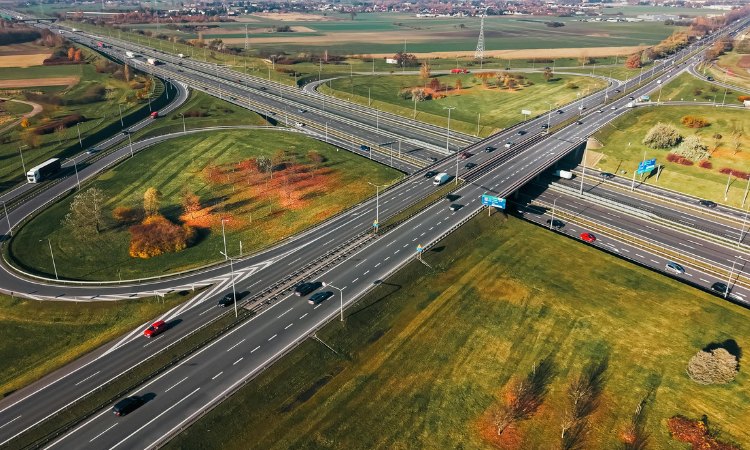
If you have ever sat in bumper-to-bumper traffic crawling from Delhi toward the Himalayan foothills, you know the frustration. What should be a scenic drive to Dehradun often stretches to six or seven grueling hours. That era is now officially over. The Delhi Dehradun Expressway is officially known as the Delhi-Saharanpur-Dehradun Economic Corridor. It is a 210-kilometre access-controlled, six-lane highway developed by the National Highways Authority of India (NHAI) under the Bharatmala Pariyojana. It connects Akshardham Temple in Delhi directly to Dehradun, the winter capital of Uttarakhand, cutting travel time to just 2 to 2.5 hours. In this detailed blog, we will know more about the Delhi Dehradun Expressway, its Route Map, Toll, Opening Date, Cost and more. So, let us start this blog. Delhi Dehradun Expressway Quick Overview Detail Information Total Length 210 km (approximately 213 km including approach stretches) Start Point Akshardham Temple, East Delhi End Point Dehradun, Uttarakhand States Covered Delhi, Uttar Pradesh, Uttarakhand Number of Lanes 6 lanes (expandable to 8 lanes) Design Speed 100 km/h minimum Project Cost Approximately Rs. 11,868 to Rs. 13,000 crore Entry/Exit Points 16 across the full corridor Underpasses 113+ (VUP, LVUP, SVUP types) Railway Overbridges 5 Major Bridges 4 Bus Shelters 62 Service Roads 76 km running parallel to the expressway Elevated Road Sections Approximately 29 km Developed By NHAI under Bharatmala Pariyojana (EPC model) Foundation Stone February 26, 2021 by Nitin Gadkari Opening April 14, 2026 by PM Narendra Modi Also Read – Ganga Expressway Delhi Dehradun Expressway Route Map and Key Cities Covered The expressway follows a north-to-northwest trajectory through some of India’s most economically active territories before climbing into the Shivalik foothills. The starting point is Akshardham, Delhi, and the end point is ISBT Dehradun. Delhi Dehradun expressway route will pass through Loni, Baghpat, Baraut, Shamli, Saharanpur and Ganeshpur. Cities and Districts on the Main Route City / District State Akshardham (Start) Delhi Baghpat (EPE Interchange) Uttar Pradesh Baraut Uttar Pradesh Shamli Uttar Pradesh Muzaffarnagar (outskirts) Uttar Pradesh Saharanpur Uttar Pradesh Ganeshpur Uttar Pradesh / Uttarakhand border Dehradun (End) Uttarakhand Spur Expressways Spur Name Details Saharanpur–Roorkee–Haridwar Expressway 50.7 km, six-lane. Connects the main corridor to Haridwar and the Char Dham highway network (Kedarnath, Badrinath, Gangotri, Yamunotri). Ambala–Shamli Expressway 121 km, six-lane. Branches off near Shamli toward Ambala, Haryana. Further connects to the Bareilly–Gorakhpur Expressway and Siliguri–Gorakhpur corridor. Delhi Dehradun Expressway Construction Phases This expressway is built in four phases. Each phase is designed around the terrain, traffic needs, and land availability for that stretch. Phase Route Length / Lanes Key Features Phase 1 Delhi (Akshardham) to Baghpat (EPE) 32 km / 12 lanes Includes 6.4 km aerial corridor from Geeta Colony to Khajoori Khas within Delhi. First section opened to public in December 2025. Travel time Delhi to Baghpat reduced from 1 hour to 25-30 minutes. Phase 2 Baghpat (EPE) to Saharanpur Bypass 118 km / 6 lanes Longest greenfield section. Passes through western UP agricultural zone. Features 7 interchanges and approximately 60 underpasses for local traffic and livestock movement. Phase 3 Saharanpur Bypass to Ganeshpur 40 km / 6 lanes Upgrades existing road infrastructure. Acts as the transition zone between the UP plains and the Shivalik foothills before entering forested terrain. Phase 4 Ganeshpur to Dehradun 20.7 km / 6 lanes Passes through Shivalik Forest Division, Rajaji Tiger Reserve, and Dehradun Forest Division. Includes the 12 km elevated wildlife corridor, 340-metre Daat Kali Tunnel, and twin elevated sections for wildlife safety. Delhi Dehradun Expressway Key Features Infrastructure Features Feature Details Travel Time Saved Reduced from 5-6 hours to 2 to 2.5 hours between Delhi and Dehradun Design Speed Minimum 100 km/h throughout most of the corridor Traffic Management Advanced Traffic Management System (ATMS) installed across full length Tolling System Closed tolling — GPS-based, pay only for distance traveled (no toll booths) FASTag Next-Gen FASTag 3.0 with satellite-based GPS tracking Service Roads 76 km of parallel service roads for local and city traffic Elevated Sections Approximately 29 km of elevated road through urban and sensitive zones Vehicular Underpasses 113+ underpasses (VUP, LVUP, SVUP) Railway Overbridges 5 railway overbridges Bus Shelters 62 bus shelters along the corridor Daat Kali Tunnel 340 to 370-metre tunnel near Dehradun reducing road footprint through forested terrain Capacity Expected to carry 20,000 to 30,000 vehicles per day Asia’s Longest Wildlife Corridor One of the unique features of this expressway is its Asia’s longest elevated wildlife corridor. Rather than cutting through one of India’s most biodiverse forest regions, the engineers built the road over it. The result is Asia’s longest elevated wildlife corridor, 12 kilometres long, that passes over Rajaji National Park and Rajaji Tiger Reserve. It is designed to protect animals while ensuring high-speed connectivity. Wildlife Corridor Details Feature Details Corridor Length 12 km elevated section over Rajaji National Park and Rajaji Tiger Reserve Total Eco-Sensitive Stretch 20 km passing through Shivalik Forest Division, Rajaji Tiger Reserve, and Dehradun Forest Division Animal Underpasses 6 dedicated animal underpasses Animal Passes 8 animal passes for smaller mammals Elephant Underpasses 2 dedicated underpasses, each 200 metres long Animal Underpass Length 10.97 km total underpass length for wildlife movement Sound Barriers Installed along sensitive stretches in collaboration with Wildlife Institute of India (WII) Light Barriers Installed to minimise impact of artificial light on nocturnal animals Habitat Species Tigers, elephants, greater hornbills, king cobras, leopards Study Conducted Joint NHAI and WII study titled Landscapes Reconnected along 18 km stretch Species Documented 18 wildlife species recorded using underpasses including elephants, golden jackal, nilgai, sambar, spotted deer, and Indian hare Elephant Usage 60+ documented instances of elephants safely using the underpasses Comparable Project Only the second highway in India with a dedicated wildlife corridor after NH-44 Note: The project required diversion of forest land and felling of thousands of trees during construction, estimated at nearly 19,000 trees. Compensatory afforestation has been undertaken by the government, though environmental groups continue to call for stronger long-term ecological monitoring. Delhi Dehradun Expressway Opening Date and Project Timeline Prime Minister Narendra Modi officially...
Branded Residences in Gurgaon

Top Branded Residences in Gurgaon for Luxury Living & Investment

Gurgaon has become one of India’s fastest-growing luxury real estate hubs. From world-class infrastructure to premium lifestyle offerings, the city is now home to some of the top branded residences in Gurgaon. These homes are not just about space; they represent status, design excellence, and global living standards. If you’re looking for the best branded residences in Gurugram, this guide will help you understand what makes them special and why they are a smart investment choice. So let us start this blog. What Are Branded Residences? Branded residences are luxury homes designed in collaboration with globally recognized brands. These brands can come from the fashion, hospitality, or automotive industries, bringing their unique design styles and service standards into residential living. In simple words, you get: Why Branded Residences in Gurgaon Are in High Demand? The demand for branded residences in Gurgaon is rising rapidly due to several reasons: 1. M3M Elie Saab If you are searching for the finest branded residences in Gurgaon, then M3M Elie Saab is a name that simply cannot be ignored. This lavish project is nestled within the iconic Billionaire’s Block at Smart City Delhi Airport, Sector-111, Gurgaon. It is developed by M3M Group in collaboration with Elie Saab. M3M is among the top builders in Gurgaon and India. Elie Saab is a premier, high-end luxury fashion brand. What makes this one of the top branded residences in Gurugram is not just the address but the experience it offers. Spread across a visionary 250-acre Smart City township. It is just 0 km from Delhi, and residents enjoy seamless connectivity alongside unmatched privacy and serenity. This is where global design meets Indian precision, creating a residential benchmark that truly stands apart. Also, it is surrounded by iconic landmarks such as Diplomatic Enclave 2, Yahobhoomi Convention Centre, and the International Sports Complex. If you’ve been waiting for something truly different in Gurgaon’s luxury market, something that holds its value, turns heads, and feels genuinely world-class, then Elie Saab is it. Key Features 2. Whiteland Westin Residences When people talk about the best branded residences in Gurugram, Whiteland Westin Residences is a name that keeps coming up. This project is located in Sector 103, Dwarka Expressway, Gurgaon. It is developed by Whiteland Corporation and powered by the globally renowned Westin brand, part of Marriott International. This luxury project is poised to become one of the largest branded residences ever delivered in Gurugram, India. It is a 20-acre master-planned community that perfectly balances urban connectivity with natural serenity. The location of this project is top-notch; it is close to Delhi, the airport, and other major locations. Also, this project is surrounded by premium residences, including Hero Homes Palatial, Satya Levante Residences, and others. But what truly sets this apart from other branded residences in Gurgaon is the Westin philosophy, six pillars of well-being woven into everyday living. This project will offer hotel-inspired concierge services, world-class wellness amenities, a lavish clubhouse, etc. The interiors are designed for people who refuse to compromise on the quality of life. Key Features 3. Tonino Lamborghini Residences There are luxury homes, and then there are homes that carry a legend. Tonino Lamborghini Residences is redefining what it means to live in one of the best branded residences in Gurgaon. It is a new launch project which is located in Sector 71, SPR Road, Gurgaon. It is developed in a prestigious collaboration between Tonino Lamborghini, the globally iconic Italian luxury brand and Signature Global. This project offers ultra-luxury 3 and BHK apartments with world-class amenities. What makes this one of the most talked-about top branded residences in Gurugram is the sheer attention to detail. Every apartment is crafted with high-end Italian-inspired finishes, premium materials, and thoughtfully designed layouts that speak the language of elegance without saying a word. The location of this project adds to its appeal. It is located on the SPR Road and close to the Dwarla Expressway and the Delhi-Jaipur Highway. It offers quick access to Golf Course Extension Road, Sohna Road, Cyber Hub, IGI Airport, and top-tier healthcare and education facilities. For discerning homebuyers and high-value investors, Tonino Lamborghini Residences Gurgaon represents a rare convergence of global brand prestige, Italian design philosophy, and Gurgaon’s most strategic address. Key Features 4. Trump Tower Some addresses don’t just tell you where you live, they tell the world who you are. Trump Tower is one of the most iconic branded residences in Gurgaon to have ever arrived in the Indian real estate market. It is developed by Tribeca Developers in partnership with Smartworld Developers. This branded residence is located in the prestigious Sector 65, Golf Course Extension Road, Gurgaon. It is a collaboration that will bring together global brand prestige, world-class design, and local real estate excellence under one extraordinary roof. Trump Tower is inspired by Manhattan high-rises; it soars above Gurugram’s skyline with a precision-sculpted glass-and-steel façade that commands attention from every angle. What places this among the top branded homes in Gurgaon is the uncompromising commitment to quality and the trust of the Trump brand, which is active across 35+ locations globally and trusted by 100K+ patrons. Key Features Conclusion Overall, the Branded residences in Gurgaon are more than just homes; they are a lifestyle statement. The top global brands are coming to Gurgaon, indicating increasing demand for a luxury lifestyle. Top global brands like Elie Saab, Westin, Lamborghini, and Trump are entering the Gurgaon market, giving buyers access to unmatched luxury and design. This list of best branded residences consists of M3M Elie Saab, Whiteland Westin Residences, Trump Tower, and Lamborghini Residences. Every project on this list represents something rare: a truly world-class home, right here in Gurgaon. The question isn’t whether you should invest in a branded residence. The question is which one is right for you? FAQs
Top Reasons to Invest in Dwarka

Top Reasons to Invest in Dwarka, Delhi – A Smart Investor’s Complete Guide

Dwarka is no longer just a suburb of Delhi. Over the last decade, it has transformed into one of the most strategically located, well-planned, and high-potential real estate markets in the entire National Capital Region (NCR). Whether you are a first time homebuyer, property investor, or an NRI seeking safe, long-term returns, understanding why Dwarka deserves your attention in 2026 is not optional. It is essential. Delhi Development Authority (DDA) has divided Dwarka into 29 meticulously planned sectors. It offers a rare combination of well-planned infrastructure, excellent connectivity, and the growth trajectory of an emerging investment corridor. In this article, we will explore the top 10 reasons to invest in Dwarka, Delhi. This guide will cover major reasons why investing in Dwarka is one of the smartest property decisions you can make today. So, let us start this blog. Dwarka at a Glance Metric Data Price appreciation (5 years) 153%+ Average YoY price increase (2024-25) 15%+ Entry-level price per sq ft From ₹5,550 Average rental yield per annum ~9% (Source: 99acres) Number of planned sectors 29 sectors Ready-to-move projects with 4%+ YoY gain 200+ projects Projected appreciation (next 2-3 years) 20-40% (Anarock) Sources: 99acres, Anarock, MagicBricks, Knight Frank India (data as of early 2026) Top 10 Reasons to Invest in Dwarka Delhi 1. Unmatched Location Let’s start with the single most powerful driver of Dwarka’s real estate value: its location. It is situated in southwest Delhi. Dwarka is strategically located adjacent to Indira Gandhi International Airport (IGI), one of the busiest airports in India. Most key sectors in Dwarka are within just 8 to 15 minutes of the airport terminal. This is not simply a matter of convenience. Globally, properties near major international airports in cities such as Dubai, Singapore, and London consistently command a premium over comparable localities that lack this access. The same dynamic is playing out right here in Delhi NCR. Its location near the airport will increase year-round demand for property. Because Senior professionals, frequent business travellers, NRIs, and high-net-worth individuals place extraordinary value on airport proximity. 2. World-Class Metro Connectivity Dwarka is among the best-served areas in Delhi for public transport. The Delhi Metro Blue Line runs directly through the township, with active stations at Sector 21, Sector 14, Sector 13, Sector 12, and beyond, giving residents rapid, affordable access to Connaught Place, Rajiv Chowk, and the broader NCR Metro network. Looking ahead, two major transit expansions are in progress. The proposed Dwarka–Gurgaon Metro Line and the Metrolite corridor will directly link Dwarka’s residential zones to Gurgaon’s prime commercial districts, such as Cyber City, Udyog Vihar, and Golf Course Road, in under 30 minutes. Dwarka offers you a well-connected location and world-class metro connectivity. For investors, more metro lines mean higher footfall, stronger residential demand, and better, more tangible long-term returns. 3. Strong & Consistent Capital Appreciation The numbers here are hard to ignore. Over the past five years, the Dwarka corridor has recorded property price appreciation of 153% or more. In the last year alone, average prices increased by over 15% from approximately ₹9,000 per sq ft to around ₹10,500 per sq ft. More than 200 ready-to-move projects in Dwarka have consistently posted year-on-year gains of more than 4%. What sustains this trajectory? A convergence of factors: sustained demand from working professionals, limited land availability within Delhi’s planned zones, ongoing government infrastructure investment, and proximity to high-value employment hubs in Aerocity and central Delhi. Also, it is close to Diplomatic Enclave II, Global City, Omaxe Sports Complex, etc. Over the next 2-3 years, this location can appreciate by 20–40%. For long-term investors, this is the ideal combination: consistent appreciation, steady rental income, and a long runway for growth as new infrastructure projects go live. 4. DDA-Planned Township – Structure, Safety & Stability Dwarka is not an organically grown, unplanned locality. It is a meticulously designed township developed by the Delhi Development Authority (DDA). It is divided into 29 well-ordered sectors with wide arterial roads, dedicated green belts, underground electricity cabling, planned drainage systems, and zoned commercial areas. This level of civic planning is rare in Indian metros and directly protects the quality and long-term value of properties in the area. For investors, this planning advantage means reduced downside risk. There is minimal exposure to encroachments, unauthorized construction, or the chaotic development patterns that eat into property values elsewhere in Delhi. The DDA has also announced a comprehensive revamp of the Dwarka township, targeting improvements to arterial roads, public spaces, and utility infrastructure, which will further elevate residential demand and property valuations. 5. Robust Rental Market & High Yields Another major reason to invest in Dwarka, Delhi, is the rental market and high yield. In Dwarka, most people are employees. They are employed at IGI Airport, the hotel and business zone in Aerocity, corporate campuses in Gurgaon, and central government offices in Delhi. This creates a year-round, reliable rental demand that insulates landlords from the vacancy risk that affects less well-connected localities. As of 2025-26, the cost of a furnished 2 BHK unit in Dwarka is approximately ₹20,000–₹25,000 per month. On the other hand, a 3 BHK can fetch up to ₹45,000 per month in premium sectors. The area delivers an average rental yield of approximately 9% per annum, significantly higher than comparable micro-markets in South Delhi or East Delhi. Sectors 4, 6, 7, 19, and 22 are consistently among the most popular with tenants and maintain notably low vacancy rates. 6. A Pipeline of Infrastructure Projects Fuelling Future Growth One of the most reliable signals of a locality’s long-term investment potential is the quality and scale of infrastructure currently in development. On this metric, Dwarka scores exceptionally well. The Dwarka Expressway (NH 248-BB), a fully operational 29-km, 8-lane controlled-access highway connecting Dwarka to Kherki Daula in Gurugram, has already transformed commute times on this corridor. Earlier, it took up to 80 minutes; now it takes under 30. Beyond this, the NHAI has commenced trial runs for a 5.1-km tunnel directly linking the Expressway...
You have been successfully Subscribed! Ops! Something went wrong, please try again.

About Us

Brokersaathi, where we redefine the real estate landscape. Established in 2023, we are more than just a company, we are your trusted partner in navigating the dynamic world of real estate. Our commitment goes beyond transactions. We are here to empower you with a suite of services that elevate your real estate experience.
©2026 BS Brokersaathi. All rights reserved

©2024- All Right Reserved. Designed and Developed by  Blaze Themes